
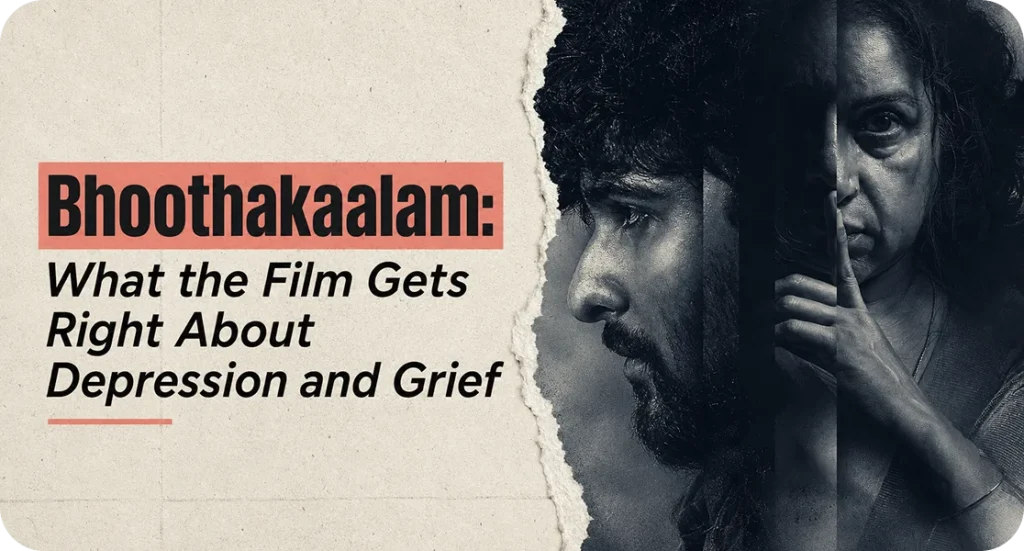
Bhoothakaalam depression mental health !! There is a scene in Bhoothakaalam where Vishnu, played by Shane Nigam, sits in the dim interior of his house and simply does not move. Not because something dramatic is happening. Not because the camera is building to a horror reveal. Just because getting up requires an energy he does not have. The world outside continues. He stays still.
Bhoothakaalam, directed by Rahul Sadasivan and released in 2022, is described as a psychological horror film. It is that. But it is also something rarer in Malayalam cinema — a genuinely clinically accurate portrait of depression, complicated grief, emotional isolation, and the specific psychological texture of two people trapped together in a space where neither can give the other what they need.
Need to Talk to Someone?
Book a private online session with a licensed therapist
This article is a psychologist’s reading of the film — not a review, but a clinical examination of what Bhoothakaalam depicts, why it matters for Keralite audiences, and what the film can teach us about recognising depression and grief in real life and in the people we love.
The Clinical Landscape of the Film
Before examining specific scenes and characters, it helps to name the clinical conditions that Bhoothakaalam is actually portraying, because the film layers several distinct psychological states simultaneously, and understanding each separately helps clarify what is happening on screen.
Major Depressive Disorder
Vishnu’s presentation throughout the film is a remarkably accurate depiction of Major Depressive Disorder. The DSM-5 diagnostic criteria require five or more symptoms present for at least two weeks, with at least one being either depressed mood or loss of interest. Vishnu demonstrates persistent low mood, profound anhedonia — the loss of capacity for pleasure — significant fatigue, social withdrawal, difficulty functioning in basic daily activities, and a pervasive hopelessness about his situation and future.
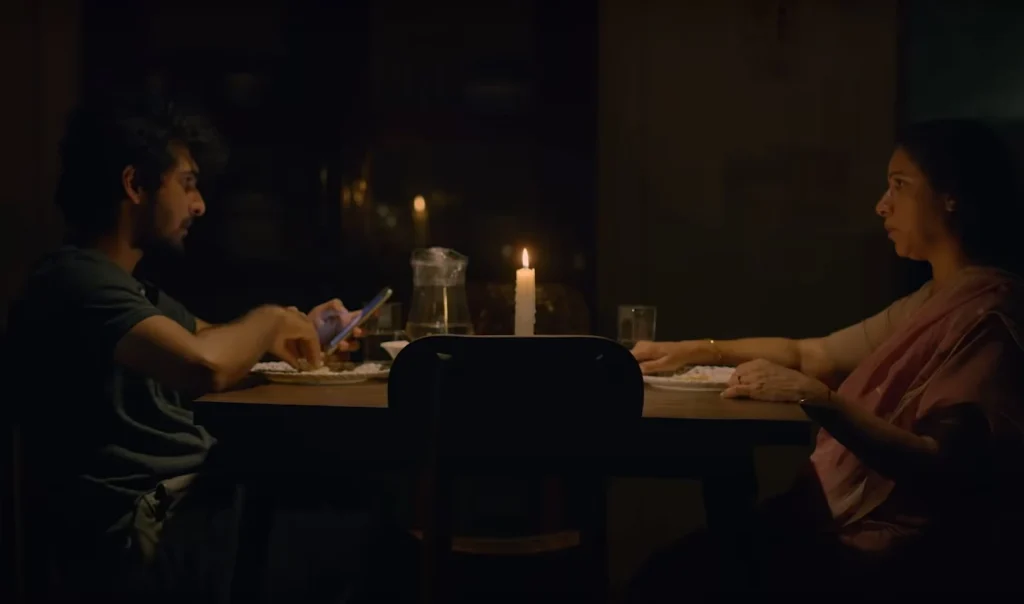
What the film captures with particular clinical precision is the quality of the depression — not dramatic, not performative, but quiet and grey and all-consuming. According to the World Health Organisation, depression affects more than 280 million people globally and is the leading cause of disability worldwide. What it often looks like in real life is exactly what Shane Nigam portrays — not weeping, not crisis, but a person who has quietly stopped being present in their own life.
Complicated Grief
The mother, played by Revathi, is experiencing what clinicians call Prolonged Grief Disorder — formerly called complicated grief — a condition in which grief does not follow the expected trajectory of processing and integration but instead becomes entrenched, consuming, and functionally impairing over an extended period.
Prolonged Grief Disorder was formally added to the DSM-5-TR in 2022, reflecting growing clinical recognition of grief that goes beyond what is expected and becomes a diagnosable condition requiring specific treatment. It involves intense longing for the deceased, difficulty accepting the loss, bitterness or anger related to the death, difficulty engaging with life without the person, and a sense that life is meaningless without them. The mother in Bhoothakaalam demonstrates all of these with a specificity that suggests either careful clinical research or direct personal understanding on the filmmaker’s part.
Emotional Isolation and Enmeshment
Perhaps the most clinically sophisticated element of Bhoothakaalam is its portrayal of the relationship between Vishnu and his mother — two people in genuine psychological distress who are simultaneously each other’s only source of human connection and each other’s primary source of psychological suffocation.
This relational dynamic — what attachment theorists call enmeshment, a boundary dissolution where individual identity becomes fused with the relationship — is portrayed with a nuance that few Malayalam films have attempted. Neither character is a villain. Both are suffering. And their proximity, which should provide comfort, instead amplifies each other’s distress in a closed, airless loop.
Bhoothakaalam: what the Film Gets Right: Scene by Scene
The Physical Reality of Depression
Bhoothakaalam consistently represents depression through the body rather than through narrative declaration. Vishnu moves slowly. He sleeps at irregular times. He eats without apparent hunger or pleasure. His physical environment deteriorates in parallel with his psychological state — the house becoming darker, more disordered, less inhabitable as the film progresses.
This somatic representation is clinically accurate in a way that is rarely achieved in cinema. Research published in The Lancet Psychiatry has documented the neurological basis of depressive fatigue — changes in basal ganglia circuits that genuinely increase the effort cost of voluntary actions. When Vishnu struggles to complete basic tasks, he is not being metaphorical. He is depicting an actual neurobiological state that anyone who has experienced clinical depression will recognise immediately.
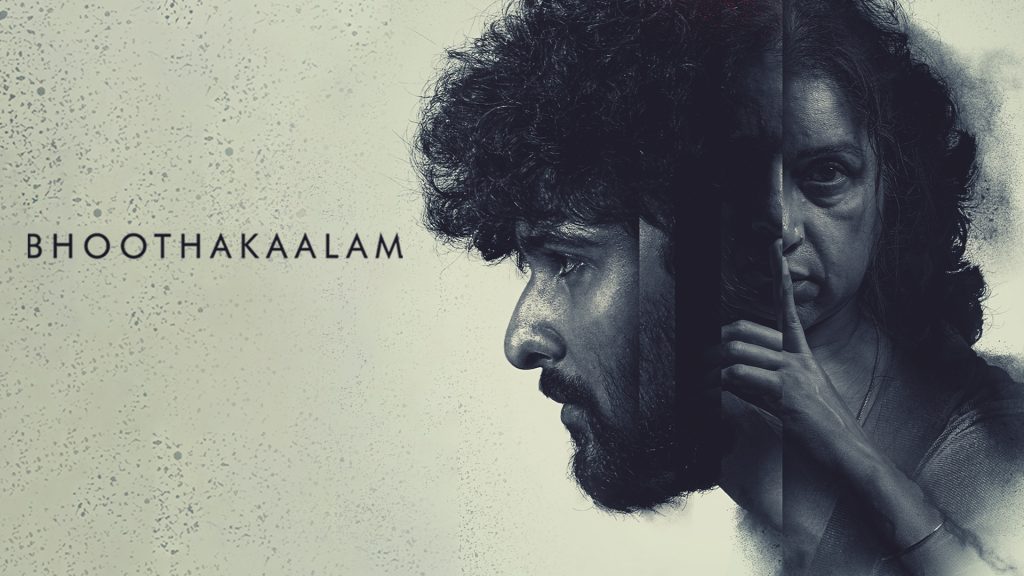
For Keralite viewers, this physical representation is particularly significant. In Kerala and across South Asian communities, depression is most often expressed and recognised through physical symptoms rather than emotional ones, the heaviness, the fatigue, the body that will not cooperate. Bhoothakaalam speaks this language fluently.
The Absence of a Clean Precipitating Cause
One of the most sophisticated clinical choices in the film is that Vishnu’s depression does not have a single, clean cause that the narrative hands to the audience. There is the failed relationship, the stalled career, the suffocating domestic situation, the mother’s grief that fills every space. But none of these alone explains the depth of what he is experiencing — and the film does not try to make it tidy.
This is clinically accurate. Depression rarely has a single cause. It develops from the interaction of biological vulnerability, accumulated psychological stress, relational factors, and the slow erosion of the resources that ordinarily sustain wellbeing. The absence of a dramatic inciting incident — the fact that Vishnu cannot point to one thing and say “this is why” — is one of the most recognisable features of clinical depression and one of the things that makes it so difficult to explain to others, particularly in Tamil and Keralite family cultures where suffering is expected to have an identifiable, external cause.
Grief That Has Not Been Processed
Revathi’s performance as the mother is a masterclass in portraying grief that has calcified rather than resolved. She has not moved through loss — she has organised her entire existence around it. The deceased person has become more present in the house than the living one. Every interaction is filtered through the absence. Every moment of potential connection with Vishnu is undercut by the pull of the grief that occupies more of her emotional space than her living son does.
This is the clinical reality of Prolonged Grief Disorder. According to research published in World Psychiatry, approximately 10 per cent of bereaved individuals develop complicated or prolonged grief that requires specific clinical intervention — grief-focused therapy rather than simply time and support. Untreated, it becomes a closed system in which the bereaved person cannot re-engage with life because the grief has become the life.
For Keralite families, where the expression of grief is heavily shaped by social expectation, religious framework, and community ritual, complicated grief often goes unrecognised. The person appears to be grieving appropriately — visibly, openly, within the expected cultural forms. What is less visible is whether the grief is moving or whether it has become a permanent state.
The Horror as Psychological Reality
The film’s horror elements — the ambiguity about what is real, the presence or absence of the supernatural, the escalating sense of something wrong in the space — function clinically as an externalisation of the characters’ psychological states.
In psychiatric and psychological practice, the experience of a depressed or severely grief-stricken person often involves a quality of unreality — the world feeling different, threatening, distorted. Clinicians call this derealization — a sense that the environment is unfamiliar or unreal — and depersonalization — a sense of being disconnected from one’s own experience. Both are documented symptoms of severe depression and acute grief.
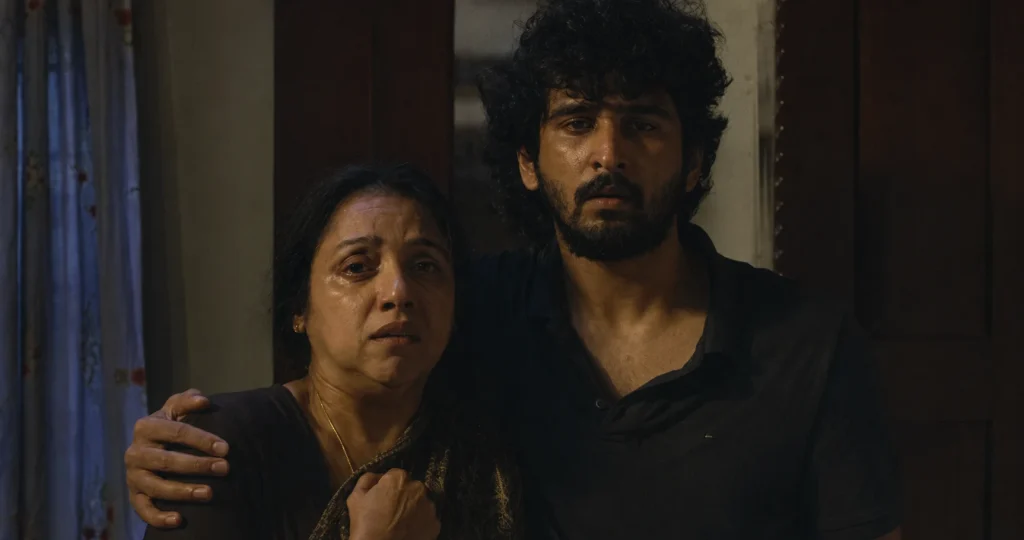
Bhoothakaalam makes this interior experience exterior and visible. The house that feels wrong, the presence that may or may not be real, the sense of something watching — these are not simply horror tropes. They are the visual language of what severe depression and entrenched grief feel like from the inside. The film asks you to inhabit that experience rather than observe it from a safe narrative distance.
What Malayalam Cinema Usually Gets Wrong — and Why This Film is Different
Most Malayalam films that touch mental health follow a recognisable pattern. The character with depression or anxiety is visibly marked — by dramatic behaviour, by a breakdown that is legible to everyone around them, by a resolution that comes from love, family support, or a single cathartic conversation. The internal experience is converted into external drama that audiences can process comfortably.
Bhoothakaalam refuses this. It is uncomfortable in the way that actual depression is uncomfortable — not because of dramatic events but because of sustained, unrelenting dullness and entrapment. There is no cathartic release that resolves the psychological situation. There is no character who sees what is happening and intervenes helpfully. The isolation is total and the film insists that you experience it as total.
This is more clinically honest than almost anything Malayalam cinema has produced in the mental health space. It does not offer the comfort of resolution. It offers the discomfort of recognition — and for people who have experienced clinical depression or lived with someone in complicated grief, that recognition is both disturbing and profound.
Research published in Transcultural Psychiatry has documented that fictional representations of mental illness significantly shape public understanding and help-seeking behaviour. Films that portray mental illness as dramatic and externally visible reinforce the belief that real depression must look that way to be legitimate. Bhoothakaalam quietly dismantles that belief by showing the internal experience with its actual texture.
The Keralite Context: Why This Story Resonates Here
The film is set in Kerala and its cultural specificity is not incidental. The closed domestic space, the intensity of the mother-child relationship, the absence of external community support or intervention, the way psychological distress is contained within the household rather than disclosed outside it — these are recognisably Keralite structures.
In Kerala’s family culture, the unit of psychological life is the household. Distress is managed within it, hidden from outside it, and rarely given language that would make it visible to professional support systems. The mother and Vishnu are not unusual in keeping their mutual suffering private — they are doing exactly what Keralite family culture would predict. What the film shows is the cost of that containment when neither person has the psychological resources to support the other and no external support exists.
For Gulf NRI families — a significant proportion of Oppam’s audience — the resonance is particular. The pattern of one family member abroad sending money home, leaving behind a household where a remaining parent and a young adult manage a psychologically fraught domestic situation largely in isolation, is not uncommon. The film’s geography is Kerala, but its emotional situation is recognisable across the diaspora.
What the Film Cannot Do — And What Real Help Looks Like
Bhoothakaalam is a film. It can illuminate. It cannot intervene.
What Vishnu and his mother needed — and what neither the film nor its characters could provide — is structured professional support. Not a concerned neighbour, not a well-meaning relative, not a single cathartic conversation. Vishnu’s depression required clinical assessment, a proper formulation, and evidence-based treatment. His mother’s complicated grief required grief-focused therapy — specifically designed for prolonged grief disorder, distinct from general counselling and distinct from medication management.
Cognitive Behavioural Therapy adapted for depression — specifically Behavioural Activation, the systematic scheduling of meaningful activity to interrupt the withdrawal cycle — is the most extensively evidenced psychological treatment for the kind of depression Vishnu exhibits. A landmark meta-analysis published in JAMA Psychiatry by Cuijpers and colleagues confirmed that CBT for depression produces effect sizes comparable to antidepressant medication, with superior durability at follow-up.
For the mother’s complicated grief, Prolonged Grief Therapy — developed specifically for prolonged grief disorder by Shear and colleagues at Columbia University — has the strongest evidence base. It is distinct from general bereavement support and addresses the specific maintaining factors that prevent grief from processing naturally.
Neither of these treatments is accessible in the world of the film. In Kerala in 2024, both are increasingly accessible through online counselling — from home, privately, without requiring the kind of public disclosure that the film’s characters would have found impossible.
When to Seek Professional Help
If Bhoothakaalam has made something visible that you recognised — in yourself or in someone you live with — that recognition is worth taking seriously.
Seek professional help if low mood, withdrawal, loss of interest in things that previously mattered, and physical fatigue have been present on most days for more than four weeks. If grief — for any loss, recent or long past — has not moved in the way you expected, and has instead become the organising principle of daily life. If the domestic situation feels airless in the way the film depicts — two people in the same space, both struggling, neither able to help the other. If there are any thoughts of self-harm or not wanting to be here — please contact iCall (9152987821) immediately.
For Keralites in Kerala and across the diaspora, online counselling in Kerala through Oppam provides access to clinically trained Malayalam-speaking therapists without the privacy concern of clinic attendance, without requiring you to explain your cultural context, and without a waiting list that delays support that is needed now. Sessions are in Malayalam, Tamil, and English, accessible from home via secure video call. Book your first session →
Frequently Asked Questions
Does Bhoothakaalam accurately depict depression?
Yes, with a clinical accuracy that is rare in Malayalam cinema. The film portrays the physical heaviness, the anhedonia, the withdrawal, and the quality of flatness that characterises Major Depressive Disorder — without the dramatic performance that most films substitute for the real experience. The somatic representation of depression through Vishnu’s slow movement, disrupted sleep, and deteriorating environment reflects documented neurobiological features of the condition. For anyone who has experienced clinical depression, the film’s portrayal will be recognisable with an accuracy that most fictional representations do not achieve.
What is the psychological condition shown in Bhoothakaalam?
The film portrays at least two distinct clinical conditions. Vishnu exhibits Major Depressive Disorder — persistent low mood, profound loss of interest, fatigue, social withdrawal, and hopelessness. The mother exhibits Prolonged Grief Disorder — a condition in which grief becomes entrenched and consuming rather than processing over time, now formally recognised in the DSM-5-TR. The relational dynamic between them — enmeshment, mutual isolation, the amplification of each other’s distress — is itself a clinically significant pattern that the film depicts with unusual sophistication.
Can depression look like what is shown in Bhoothakaalam?
Yes, and this is one of the most important clinical points the film makes. Depression in real life rarely looks like the dramatic, externally visible breakdown that popular culture portrays. It more often looks like what Bhoothakaalam shows — a person who is still present, still technically functioning at a minimal level, but internally flat, withdrawn, and carrying a weight that is not visible to casual observation. This quiet, grey, sustained form of depression is the most common presentation and the most frequently missed — particularly in Keralite families where it is normalised as tiredness, stress, or personality.
Where can I find online therapy in Kerala for depression and grief?
Oppam offers online therapy Kerala for depression, grief, and related conditions in Malayalam and English. Sessions are conducted via secure video call, accessible from anywhere in Kerala or the South Asian diaspora, with therapists trained in CBT for depression and grief-focused approaches for prolonged grief. No GP referral is required. An online psychologist Kerala through Oppam understands the cultural context of Keralite family life — the containment, the isolation, and the specific way these conditions develop and hide in our communities.
Is complicated grief different from normal grief?
Yes, clinically distinct. Normal grief is painful but follows a general trajectory of processing and integration over time. Prolonged Grief Disorder — formerly called complicated grief, now formally recognised in the DSM-5-TR — involves grief that becomes entrenched rather than processing, with intense longing, difficulty accepting the loss, inability to re-engage with life, and persistent sense of meaninglessness without the deceased. Approximately 10 per cent of bereaved individuals develop this pattern according to research published in World Psychiatry. It requires specific grief-focused therapy rather than general support or the passage of time.
Can online therapy help with depression as severe as what Bhoothakaalam depicts?
For moderate depression — the level primarily depicted in the film — yes, online CBT produces outcomes equivalent to in-person therapy, confirmed by multiple randomised controlled trials reviewed in World Psychiatry. For severe depression with significant safety concerns, an in-person clinical assessment is the appropriate first step. The film depicts a level of depression that would benefit enormously from structured intervention — Behavioural Activation, cognitive restructuring, and where appropriate, medication alongside therapy. The tragedy of the film is not that treatment does not exist. It is that neither character accesses it.
How do I support someone showing signs of depression like the characters in Bhoothakaalam?
Avoid minimising responses — “you have so much to be grateful for,” “everyone goes through this” — however well-intentioned. Name what you have noticed specifically and privately: “You have not seemed yourself lately and I am concerned about you.” Create space without pressure. Provide specific, low-barrier information about professional support options — including online therapy, which removes the privacy concern that prevents many Keralites from seeking help. If there is any indication of suicidal thinking or self-harm, treat this as urgent and contact crisis services immediately.
External Resources
- World Health Organisation — Depression as leading cause of disability globally; 280 million affected; prevalence and burden data
- JAMA Psychiatry (Cuijpers et al.) — Meta-analysis of CBT for depression; effect sizes comparable to medication; superior durability at follow-up
- The Lancet Psychiatry — Neurological basis of depressive fatigue; basal ganglia circuits and increased effort cost of voluntary actions in depression
- World Psychiatry — Prevalence of prolonged grief disorder (approximately 10% of bereaved); online therapy equivalence to in-person delivery
- Transcultural Psychiatry — Fictional representations of mental illness and their effect on public understanding and help-seeking behaviour in South Asian communities
Struggling?
Talk to an Oppam Therapist
Get the Support You Deserve Online & Confidential