The difference between stress anxiety and panic attacks is often misunderstood, even though these mental health issues can feel similar and are frequently intertwined.
Let’s differentiate between stress, anxiety, and panic attacks.
Stress is a normal response to a challenging situation, anxiety is a persistent feeling of worry or fear, and panic attacks are intense episodes of fear or discomfort that can be debilitating.
Stress is a complex and multifaceted concept that can be defined in various ways. At its core, stress is a natural human response to a difficult or threatening situation that triggers a range of physiological, cognitive, and behavioral reactions.
Imagine you’re facing a tight deadline at work. You have to complete a project within a short timeframe and feel overwhelmed by the amount of work you need to do. You might experience physical symptoms like headaches, fatigue, or stomach problems and feel irritable or short-tempered. This is an example of stress, which is a normal response to a challenging situation.
Anxiety is a complex emotional state characterized by feelings of worry, nervousness, or fear that are persistent and overwhelming.
Suppose you’re worried about an upcoming job interview. You’re thinking about it constantly, and you’re afraid of not making a good impression or not getting the job. You might experience physical symptoms like a racing heart, sweating, or trembling, and you might feel nervous or on edge. This is an example of anxiety, which is a feeling of worry or fear that’s persistent and overwhelming.
Panic attacks can be a symptom of various anxiety disorders, including panic disorder. If you’re experiencing panic attacks, it’s essential to seek help from a mental health professional.
Need to Talk to Someone?
Book a private online session with a licensed therapist
Picture this: you’re in a crowded shopping mall, and suddenly you feel a intense surge of fear. Your heart starts racing, you start sweating, and you feel like you’re going to pass out or lose control. You might experience symptoms like shortness of breath, chest pain, or dizziness, and you might feel like you’re going to die or lose your mind. This is an example of a panic attack, which is a sudden and intense episode of fear or discomfort that’s often accompanied by physical symptoms.
stress is a normal response to a challenging situation, anxiety is a persistent feeling of worry or fear.
Let’s look into the differences between stress and anxiety..
What is stress?
Mental stress is a term that doesn’t require an introduction. It’s a state of mental tension that occurs in response to favorable or unfavorable circumstances. In today’s modern living environment, the potential for stress is high, and it has become a villain that directly affects physical and mental health.
- Defining what stress is and explaining it clearly is not easy, but we all experience it daily. Mental stress follows us at home, school, and workplace. If internal or external problems affect the functioning of the body and mind, it can be called stress(Hans Selye).
- Not all stress in life affects the body and mind negatively; a certain level of mental stress is necessary. Without stress, life would be dull and lack thrill or challenge. What causes stress to one person may not stress another.
- Buying a new vehicle might cause immense mental stress for some, while others might find it a pleasant experience. This means that mental stress is personal to a certain extent.
- The level of stress experienced often depends on circumstances, past experiences, and more. Mental stress can affect people of all ages, including children and adults, each having their unique stressors.
- Research suggests that mental stress can influence humans even during pregnancy. When a mother is under immense stress, it can affect the fetus’s movements, heart rate, and overall development.
- The physical effects of mental stress can start as early as fetal development in the womb. Isolation and even transmitted stress can follow us as mental stress throughout our lives.
Stress responses
Although stress affects each person differently, the physical responses it triggers can be similar. For instance, imagine crossing the road and suddenly a vehicle speeding towards you.
- Your body would experience a surge of energy, muscles tensing, and an involuntary jump reaction. These sudden stress-induced physical changes would be similar in everyone.
- In such emergency situations, the hypothalamus in the brain triggers these physical responses. These changes occur in a split second, and time is of the essence. If we didn’t react quickly, the vehicle might hit us.
- These emergency responses are called “fight or flight” responses. Fortunately, such stress responses are short-lived, and once the danger passes, we return to a state of relief.
- However, when stress exceeds its limits, it becomes pathological, negatively impacting the body and mind, disrupting the rhythm of life. This is when stress becomes a disease.
Personality traits and Stress
Personality traits are complex and difficult to define, but people are often categorized into types based on common characteristics.
- Type A: These individuals are characterized by impatience, a strong desire to achieve more, and a willingness to work hard. Many Type A individuals are successful and reach high levels of achievement, but they often experience stress and tension. They may be prone to anger, frustration, and anxiety. Type A individuals need to control their impatience and aggression to avoid personal and social problems.
- Type B: In contrast, Type B individuals are relatively calm and peaceful. They have a balanced approach to life, are less prone to stress, and don’t get overly upset by failures. However, their laid-back attitude can sometimes be detrimental.
- Introverts and extroverts: Another way to categorize individuals is based on their behavioral characteristics, such as introversion and extroversion. Extroverts are often seen as outgoing, talkative, and sociable, while introverts are perceived as shy, preferring solitude and quieter environments. Neither type is inherently better than the other, but introversion is sometimes associated with stress and creativity.
It’s worth noting that adopting a balanced approach, rather than extreme introversion or extroversion, is often beneficial. With self-awareness and effort, individuals can control their personality traits and manage stress effectively.
symptoms
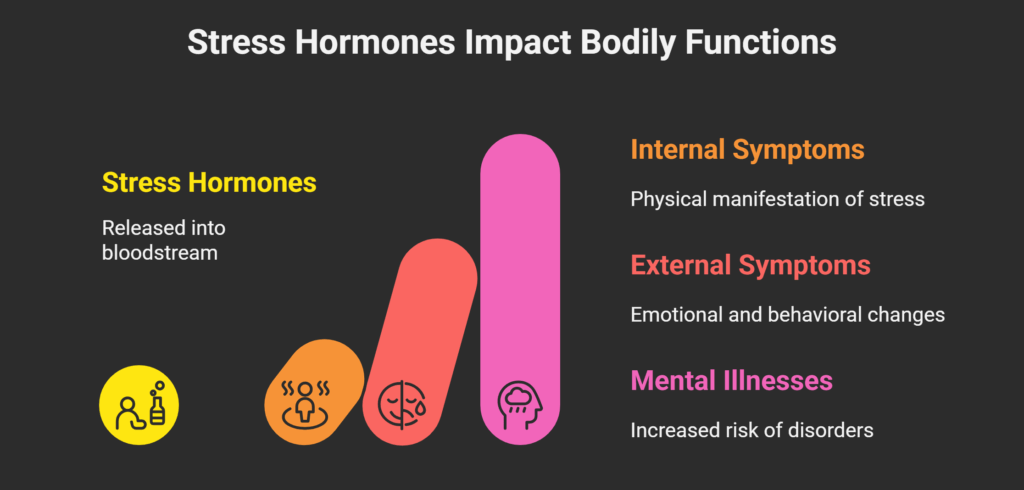
Symptoms of tension can manifest in two ways: internally and externally. When the body responds to a stressful situation, it releases a large amount of various hormones into the bloodstream. The increased levels of these hormones in the blood can negatively impact the functioning of different organs, leading to the manifestation of symptoms. When these symptoms occur frequently and become a regular pattern, tension can turn into a disease.
Internal Symptoms:
Stress can negatively impact the functioning of the heart, lungs, digestive system, nervous system, sweat glands, endocrine glands, muscles, and more. This can lead to various physical symptoms, including:
- Increased heart rate
- Chest pain
- Chest discomfort
- Headaches
- Body heat
- Rapid breathing
- Shortness of breath
- Excessive sweating
- Dry mouth
- Stomach upset
- Frequent urination
- Trembling or shaking
- Severe fatigue
- Loss of appetite
- Vomiting
- Back pain
- Body aches
These physical symptoms can be a manifestation of internal stress.
External Symptoms:
The hormonal changes caused by stress can manifest not only as internal and physical symptoms but also as emotional and behavioral symptoms, which are referred to as external symptoms. Common external symptoms include:
- Fear
- Excessive anger
- Resentment
- Sadness
- Lack of concentration
- Memory loss
- Insomnia
- Changes in appetite (increase or decrease)
- Frequent mood swings
- Decreased sexual interest
These external symptoms can be a visible manifestation of the underlying stress.
Stress and Mental-Physical Illnesses:
As stress increases, the risk of related physical and mental illnesses also rises. The inability to cope with stress is a major cause of mental health issues. Chronic stress can lead to the development of mental health conditions such as severe depression, anxiety disorders, manic episodes, and psychotic episodes. It can also exacerbate existing mental health conditions.
Feeling Overwhelmed?
You’re Not Alone. Get Support from an
Oppam Therapist Wherever You Are
Oppam Therapist Wherever You Are
Furthermore, stress is a significant contributor to substance abuse (alcohol, tobacco, pan masala, and other intoxicants) and suicidal tendencies. Stress also plays a substantial role in psychosomatic disorders, which include conditions such as:
- Hypertension
- Heart attack
- Irritable Bowel Syndrome (IBS)
- Asthma
- Diabetes
- Menstrual irregularities
- Thyroid disorders
- Decreased libido
- Obesity
- Acidity
- Hair loss
While these conditions may have clear physical causes, stress can trigger their onset in susceptible individuals and worsen symptoms in those already affected. Effective management of these conditions often requires stress reduction, highlighting the importance of addressing mental tension in treatment plans.
What is anxiety?
Anxiety disorder is a mental health condition characterized by excessive and persistent feelings of fear, worry, or anxiety that interfere with daily life. Symptoms can include:
- Restlessness and feeling on edge
- Difficulty concentrating
- Irritability
- Muscle tension
- Sleep disturbances
Anxiety disorders can take many forms, such as generalized anxiety disorder(GAD), panic disorder, social anxiety disorder, and phobias
1.Phobia(Phobic Anxiety Disorder)
Phobia is characterized by an intense, irrational fear or anxiety triggered by a specific situation, object, or environment that poses no real danger. This fear leads to avoidance behaviors. Phobias can be categorized into three main types:
- Agoraphobia
- Social Phobia
- Specific Phobia
Agoraphobia and specific phobia are more common in women. Social phobia affects both men and women
People with phobias often try to avoid situations that trigger anxiety. If unavoidable, they endure the situation with great distress.
Agoraphobia: Fear of Public Places
Agoraphobia is characterized by intense anxiety or fear in situations such as:
- Being in open spaces or crowded areas alone
- Traveling in crowded buses or trains
- Being in situations where escape might be difficult
The core fear is the feeling of being trapped or unable to escape from a situation that triggers anxiety. Common symptoms include:
- Extreme panic in crowded places, public areas, or while traveling alone
- Physical symptoms like rapid heartbeat, sweating, dry mouth, and trembling
- Fear of fainting or losing control
- Feeling anxious or panicked when alone in public places
- Relief when accompanied by someone trusted
- Avoidance of situations that trigger anxiety, often leading to staying at home.
Specific Phobia: Fear of Specific Objects or Situations
Specific phobia is characterized by an intense fear or anxiety triggered by a specific object, situation, or experience. This fear leads to avoidance behaviors. Common symptoms include:
- Anxiety symptoms like rapid heartbeat, sweating, shortness of breath, and dry mouth
- Presence of the feared object or situation triggers symptoms
- Avoidance of the feared object or situation to prevent anxiety
Specific phobias often begin at a young age and may resolve on their own. However, if the phobia develops later in life, it may persist. Specific phobias are named based on the object or situation that triggers the fear, such as:
- Claustrophobia (fear of enclosed spaces)
- Acrophobia (fear of heights)
- Animal phobia (fear of animals)
- Examination phobia (fear of exams)
- Xenophobia (fear of strangers or foreigners)
Social Phobia: Fear of Social Situations
Social phobia is characterized by intense anxiety or fear in social situations, such as:
- Being observed by others
- Interacting with others (e.g., conversations, public speaking)
- Performing tasks in public (e.g., cashing a check at a bank)
The main symptoms include:
- Intense anxiety and nervousness in social situations
- Avoidance of situations that trigger anxiety
- Social isolation due to avoidance behaviors
- Difficulty forming and maintaining personal and social relationships
Social phobia often begins in adolescence and can worsen if left untreated, leading to:
- Complete social isolation
- Agoraphobia-like behavior (avoiding leaving home)
- Debilitating symptoms that impact daily life
2.Generalized Anxiety Disorder (GAD)
GAD is characterized by persistent and excessive worry about everyday things, even when there is no apparent reason to worry. People with GAD:
- Feel constantly “on edge” or anxious
- Worry about various things, such as relationships, health, finances, or the future
Experience physical symptoms like:
- Muscle tension
- Restlessness
- Sleep disturbances
- Rapid heartbeat
- Sweating
- Trembling
May become overwhelmed by minor concerns, such as:
- Worrying about catching a bus
- Fearing a trip might not go as planned
- Excessively worrying about meeting someone
GAD can interfere with daily life, making it difficult to function normally. Symptoms can start at any age, but often begin in adolescence or young adulthood. If left untreated, GAD can lead to significant distress and impairment in daily life.
People with GAD may seek help from various medical specialists due to physical symptoms, rather than mental health professionals. Proper treatment is essential to manage symptoms and improve quality of life.
Panic disorder is characterized by recurring panic attacks, which are intense episodes of fear or anxiety that peak within minutes and include symptoms such as:
- Rapid heartbeat
- Shortness of breath
- Dizziness
- Fear of losing control or dying
- Numbness or tingling
Panic attacks can occur at any time, and the fear of having another attack (anticipatory anxiety) can be a significant aspect of the disorder. Panic disorder can occur with or without agoraphobia (fear of public places).
Panic symptoms can also be associated with other mental health conditions, such as depression, schizophrenia, and OCD. Additionally, some medical conditions (e.g., heart disease, hyperthyroidism, hypoglycemia) and substance use (e.g., caffeine, nicotine, amphetamines) can trigger panic-like symptoms.
It’s essential to seek professional help to accurately diagnose and treat panic disorder, as it can significantly impact daily life.
| Stress | Anxiety |
|---|---|
|
1. A response to a specific situation or pressure. |
1. A persistent feeling of worry, nervousness, or fear. |
|
2. Can be beneficial in small doses, motivating individuals to take action. |
2. Often characterized by internal thoughts, feelings, and physical sensations (e.g., racing heart, sweating, trembling).
|
|
3. Typically subsides once the situation is resolved. |
3. Can be a pervasive and ongoing experience, even in the absence of an external threat. |
|
4. Usually subsides once the situation is resolved or the pressure is removed. |
4. May not have a clear cause or trigger.
|
|
You’re facing a tight deadline at work, and you feel stressed about meeting it. Once the deadline passes, the stress typically subsides. |
You’re constantly worried about meeting deadlines, even when there aren’t any looming, and this worry affects your daily life. |
While stress can contribute to anxiety, and anxiety can be triggered by stress, they are distinct experiences. Understanding the difference can help you address each more effectively.
A panic attack is a sudden, intense episode of anxiety and fear that occurs without any apparent reason or trigger, such as external pressures or physical problems. This condition typically lasts for only a few minutes to hours.
If a thief or murderer attacks with a weapon, it’s natural to feel afraid. However, a panic attack is a severe condition that occurs without any specific reason or trigger. It can happen at any time, such as while driving, sleeping, or relaxing.
Some people may experience panic attacks multiple times a day. Others may experience them weeks or months apart. Panic attacks can be unpredictable and disrupt daily life. If you’re experiencing symptoms of panic attacks, it’s essential to seek professional help.
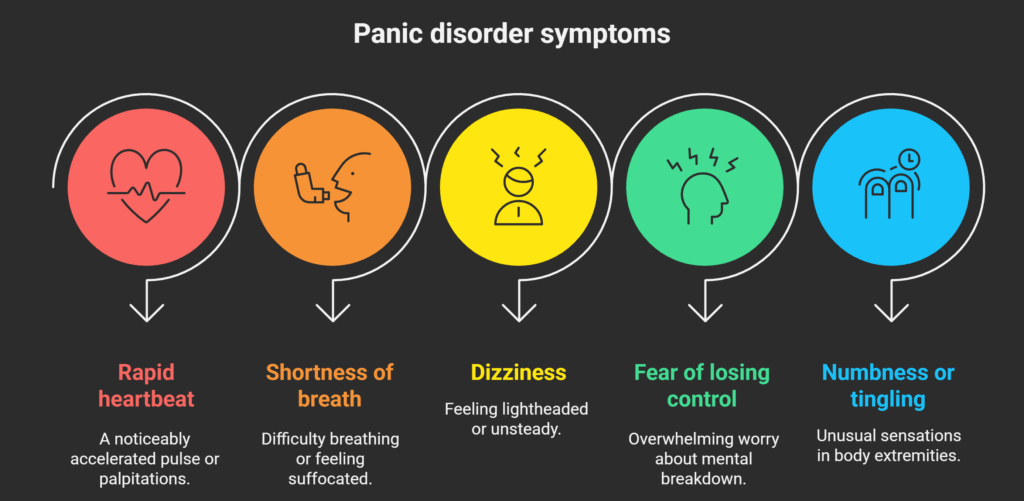
To diagnose panic disorder, at least four of the following symptoms should be present:
- Palpitations or strong heartbeat without reason
- Sweating
- Trembling or shaking
- Feeling of shortness of breath
- Chest pain or discomfort
- Nausea or abdominal distress
- Dizziness or lightheadedness
- Feeling of losing control or awareness of surroundings
- Fear of losing control or going crazy
- Fear of dying
- Numbness or tingling sensations in hands, feet, or other body parts
You should seek professional help for panic attacks if you experience:
- Frequent or severe panic attacks
- Interference with daily life or relationships
- Persistent fear of having another attack
- Avoidance behaviors due to fear
- Physical symptoms like rapid heartbeat, sweating, or trembling
Consult a mental health professional, such as a therapist or psychiatrist, for proper diagnosis and treatment. They can help you develop coping strategies and provide support to manage panic attacks.
| Stress | Anxiety | Panic attacks |
|---|---|---|
|
1. A response to a specific situation or pressure. |
1. A persistent feeling of worry, nervousness, or fear. |
1.Sudden, intense episodes of fear or anxiety. |
|
2. Can be beneficial in small doses, motivating individuals to take action. |
2. Often characterized by internal thoughts and physical sensations.
|
2. Often characterized by internal thoughts, feelings, and physical sensations (e.g., racing heart, sweating, trembling).
|
|
3. Typically subsides once the situation is resolved. |
3. Can be a pervasive and ongoing experience. |
3. Can feel overwhelming and uncontrollable. |
|
4. May cause physical symptoms like tension, fatigue, or irritability. |
4. May cause symptoms like apprehension, fear, or avoidance behaviors. |
4. May occur without warning or trigger. |
Key differences:
- Duration: Stress can be ongoing, anxiety can be persistent, but panic attacks are typically short-lived (usually 5-30 minutes).
- Intensity: Panic attacks are extremely intense, while stress and anxiety can vary in intensity.
- Physical symptoms: Panic attacks often involve more severe physical symptoms, like rapid heartbeat and shortness of breath.
- Triggers: Stress often has a clear trigger, anxiety may have a vague or internal trigger, and panic attacks can occur without warning.
A life filled with stress is an extremely intense and terrifying experience. It’s similar to surviving a natural disaster like an earthquake or flood by a hair’s breadth. Some people who experience such situations can develop mental health issues. The same life experience can affect people differently, and the severity of the illness can vary accordingly. However, these conditions can make life unbearable. This section will discuss three major illnesses.
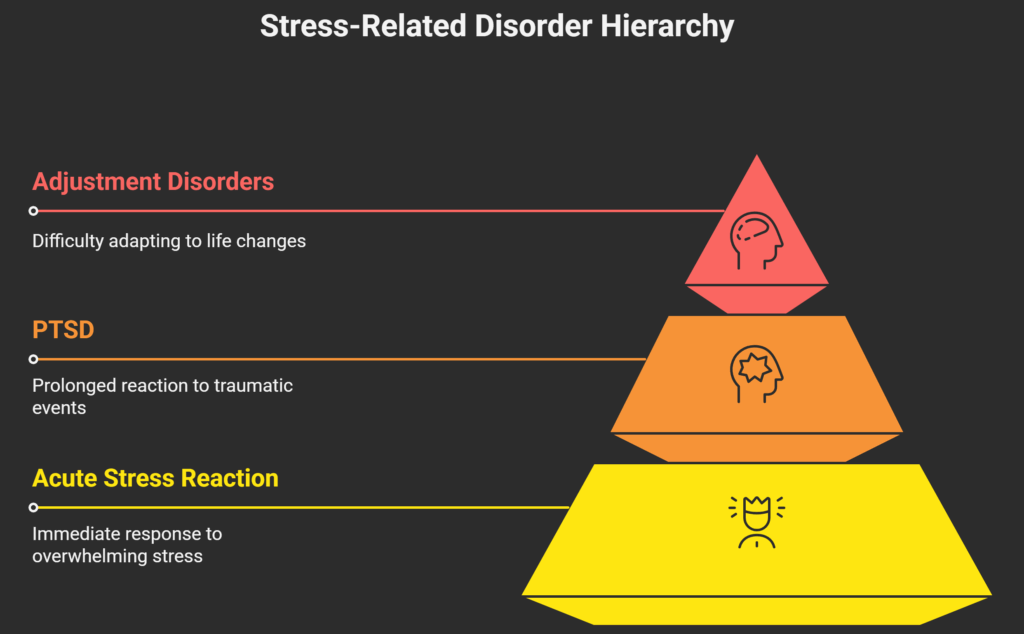
1.Acute Stress Reaction
Trust is the foundation of any relationship. When two different individuals
The main symptom of this disease is intense anxiety. This condition is a reaction to a traumatic experience (such as an earthquake, road accident, war, physical assault, or rape) that occurs in individuals without any pre-existing mental health conditions. The symptoms of this disease can appear within minutes of the traumatic event.
Initially, there may be a brief period of numbness or dissociation, during which the individual may lose awareness of their surroundings and appear to be in a daze. This is followed by intense anxiety, agitation, and distress, accompanied by physical symptoms such as rapid heartbeat, sweating, dry mouth, and trembling.
These symptoms can recur frequently, and the individual may experience anxiety all the time. This condition can last for several hours, days, or even longer. With time, the individual will gradually return to their normal state.It appears that the text is describing Acute Stress Reaction (ASR) or Acute Stress Disorder (ASD), which is a condition that can develop after a person experiences a traumatic event.
PTSD can be considered a delayed response to a traumatic life experience, which can be extremely frightening and life-threatening. Examples of such experiences include natural disasters, wars, road accidents, witnessing a tragic death, physical and mental abuse, or rape.
Anyone can develop PTSD, but individuals with high levels of stress or those who are emotionally vulnerable may experience more severe symptoms. Symptoms may appear weeks or even months after the traumatic event, typically within six months.
The disorder can manifest with varying levels of severity, and while many people can expect to fully recover, some may experience persistent symptoms.
- Recurring, intrusive thoughts or memories of the traumatic event
- Flashbacks, where the individual relives the traumatic experience
- Survivor’s guilt, grief, or feelings of responsibility for the traumatic event
- Avoidance of people, places, or activities that remind them of the trauma
- Anhedonia, or a lack of pleasure in activities they once enjoyed
- Hyperarousal, irritability, or aggression when reminded of the trauma
Symptoms can also include anxiety, depression, substance abuse, and suicidal thoughts. Mentioning the traumatic event can provoke intense emotional reactions, agitation, or even aggression in individuals with PTSD.
3.Adjustment Disorders
Undesirable life situations, marital discord, sudden changes in life circumstances, and the unexpected death of a significant family member are just a few examples of life events that can disrupt one’s rhythm. The mental stress that follows one or two such experiences is the underlying cause of this disease. Individual personality traits also contribute to the development of this condition.
This disease can be easily triggered, and even the strongest minds can be affected by persistent stress. For example, a woman living with a husband who has paranoid tendencies may develop mental health issues. Adjustment disorders can manifest in various ways, including depression, anxiety disorders, and substance abuse. Many problems can arise from adjustment disorders.
It appears that the text is discussing Adjustment Disorder, a condition that occurs when an individual struggles to cope with significant life changes or stressors.
General Adaptation Syndrome (GAS) model
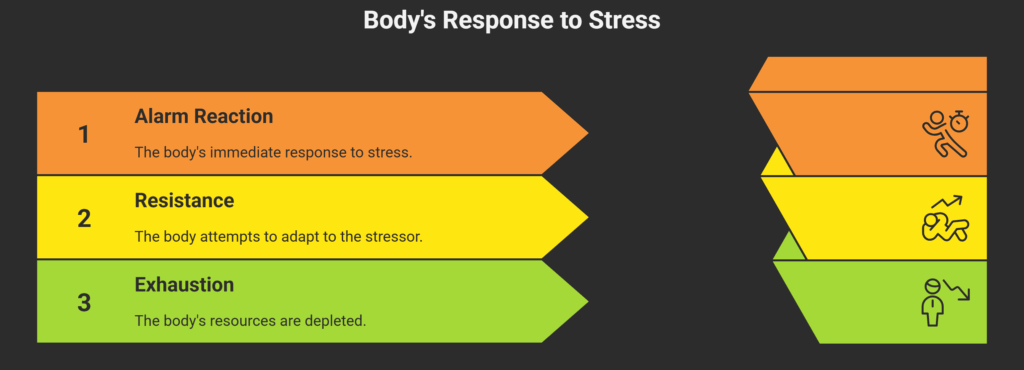
Hans Selye’s General Adaptation Syndrome (GAS) model describes the body’s response to stress in three stages:
1.Alarm Reaction Stage
The body’s initial response to stress, characterized by:
- Fight-or-flight response
- Increased heart rate, blood pressure, and respiration
- Release of stress hormones (adrenaline, cortisol)
2.Resistance Stage
The body tries to adapt to the stressor and:
- Attempts to cope with the stress
- May appear to return to normal functioning
- Still experiencing physiological responses to stress
3.Exhaustion Stage
The body’s resources are depleted, leading to:
- Physical and mental exhaustion
- Decreased ability to cope with stress
- Increased risk of illness, disease, or burnout
Selye’s GAS model highlights the importance of managing stress to prevent long-term damage to physical and mental health.
A tension-free lifestyle
Let’s face it, a stress-free life isn’t realistic in today’s world. Instead, we need to learn to deal with stressors and live healthy lives. That means adjusting our lifestyle and building skills to handle tension. Here are some easy tips to live healthy in today’s high-stress world. And don’t forget, getting pro help when you need it can be a game-changer!
Plan Ahead
By planning daily life activities, stress can be reduced to some extent. For instance, planning and saving for children’s educational expenses before the academic year starts can avoid last-minute scrambles and associated stress. Scheduling daily tasks from morning to night with priorities and allocating sufficient relaxation time between each activity can also reduce stress.
Step Away
It’s impossible to anticipate and plan for every aspect of life, and unexpected events can cause stress and tension. In such situations, taking a break and stepping away from the stressful situation can help alleviate tension. This is why people often advise counting to 100 when angry – it gives you time to calm down.
Get Your Posture Right
We’re a society of sitters – we sit at work, in the car, and on the couch. But poor posture can lead to aches and pains and stress. Sit up straight, use a good chair, and you’ll feel the difference. Less back pain, less stress – win-win!
Tune In
Music is a proven stress-buster. Listen to your favorite tunes, and you’ll feel your tension melt away. Don’t worry about what genre – just pick what you love, and let the music work its magic.
Laugh It Off
Laughter is the best medicine, right? It’s true! Laughing can reduce stress and boost your mood. And it’s contagious – when you laugh, others laugh too. Some therapists even use laughter therapy to help people relax and feel better.
Get Lost in a Book
Reading is a proven stress-buster. When you’re feeling overwhelmed, pick up a good book and let the words transport you to a calmer place. Some therapists even use bibliotherapy to help people cope with stress and anxiety.
Find Your Happy Place (Hobby)
Hobbies are amazing stress-relievers. When you’re doing something you love, you feel more relaxed and happy. Whether it’s collecting stamps, gardening, or reading, make time for your hobby and watch your stress levels drop.
Chill Out with Yoga and Meditation
Yoga and meditation can work wonders for stress and anxiety. Even a few minutes a day can make a big difference. Can’t make it to a yoga studio? Try sitting quietly with your eyes closed, focusing on your breath, and letting go of tension. Deep breathing exercises can also help calm your mind and body.
Talk It Out
When we don’t have someone to talk to, stress can build up. Sharing your problems with someone you trust can help you feel better. Make an effort to build strong relationships and don’t be afraid to open up when you need to.
Set Boundaries
Don’t take on too much – it’s a recipe for stress! Learn to say no when you need to, and prioritize your own well-being. It’s okay to set boundaries and assert yourself.
Catch Those Z's
Sleep is essential for managing stress and anxiety. When you don’t get enough sleep, your body goes into stress mode. Aim for 8 hours of sleep each night, and focus on getting good quality sleep too. Your mental health will thank you!
Think Positive
Good vibes only! Research shows that positive thinking and optimism can help reduce stress and anxiety. When you approach life’s challenges with a positive attitude, you’re more likely to bounce back and stay calm.
Set Yourself Up for Success
Don’t set yourself up for stress by aiming too high. Set realistic goals that you can achieve, and you’ll feel more in control and less stressed.
Ditch the Bad Habits
Unhealthy habits like smoking, drinking, and substance abuse might seem like a way to cope with stress, but they can actually make things worse. Quit these habits and you’ll be better equipped to handle stress and anxiety.
Chill Out with Relaxation Techniques
Our bodies have a natural way of handling stress, and relaxation techniques can help us tap into it. These techniques can calm your mind, reduce stress hormones, and even lower your heart rate and blood pressure. Try yoga, meditation, or deep breathing exercises to feel the benefits.
Get Feedback on Your Stress
Biofeedback training is a way to measure your stress levels and learn to control them. Using special equipment, you’ll get feedback on your stress levels and can use relaxation techniques to bring them down.
Relax Your Muscles
Progressive muscle relaxation is a technique that involves relaxing different muscle groups in your body. Starting from your toes and working your way up to your face, you can release tension and feel more relaxed. With practice, you can use this technique to calm yourself down in stressful situations.
Relax Anywhere
With practice, you can use relaxation techniques anywhere, anytime. Just imagine relaxation spreading through your muscles, and you’ll feel more calm and centered.
Get Professional Help
If you’re struggling with stress, anxiety, or panic attacks, don’t hesitate to seek professional help. Counseling or therapy can make a big difference in managing these conditions and improving your overall well-being. A professional can also teach you relaxation techniques, stress management strategies, and help you develop a positive mindset.
Struggling?
Talk to an Oppam Therapist
Get the Support You Deserve Online & Confidential