In India, discussions about men’s mental health are generally limited, and Kerala is no exception to this trend. In the context of the increasing suicide rates in Kerala, focused mental attention and care are essential in this area.
Malayalam grief counseling offers support for people experiencing grief, a deeply personal journey that feels different for everyone. Grief is a feeling that is experienced differently by everyone. When someone very dear to us leaves us, it is natural for people to go through intense sadness, anger, and a range of other emotional upheavals. This can be described as grief.
However, grief often causes difficulties in people’s lives. While grief is a feeling experienced when someone very dear to us is lost, the way it is experienced can vary due to factors like family background, culture, life experiences, personal values, and beliefs. Symptoms of grief include isolating oneself, being angry, or constantly feeling sad. Grief can lead to significant emotional states.
In such situations, grief counseling and bereavement therapy become relevant. If grief persists for a long time and causes intense emotional distress, seeking grief counseling or therapy can help improve mental well-being.
What is Grief ?
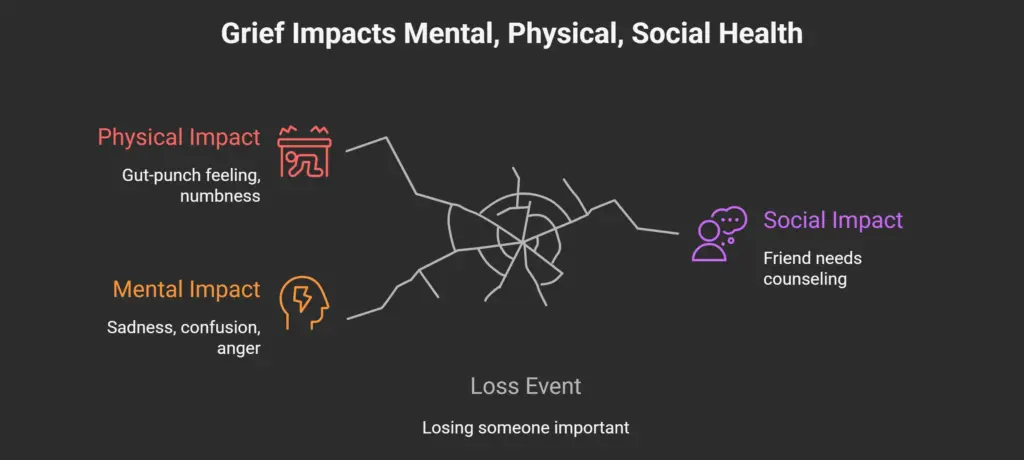
Grief is that gut-punch feeling you get when you lose someone or something important to you. It’s the emotional rollercoaster of sadness, pain, confusion, anger, guilt, and sometimes even numbness that comes with loss. But it’s not just crying and heartbreak—it can hit you mentally, physically, and socially.
For instance, if a close friend who used to laugh and joke around with you ends up in such a state after losing someone dear to them, providing them access to counseling support is the best thing you can do. Online counseling sessions through Oppam’s Malayalam-speaking therapists can be utilized to offer such help.
Process of Grieving
Hari and Meera were childhood sweethearts who had grown up in the same village in Kerala. After years of dreaming about their future together, they finally got married and moved into a small house surrounded by coconut trees and a jackfruit tree planted by Meera’s father. Their life was simple but beautiful—Hari worked as a teacher, and Meera ran a small tailoring shop from home.
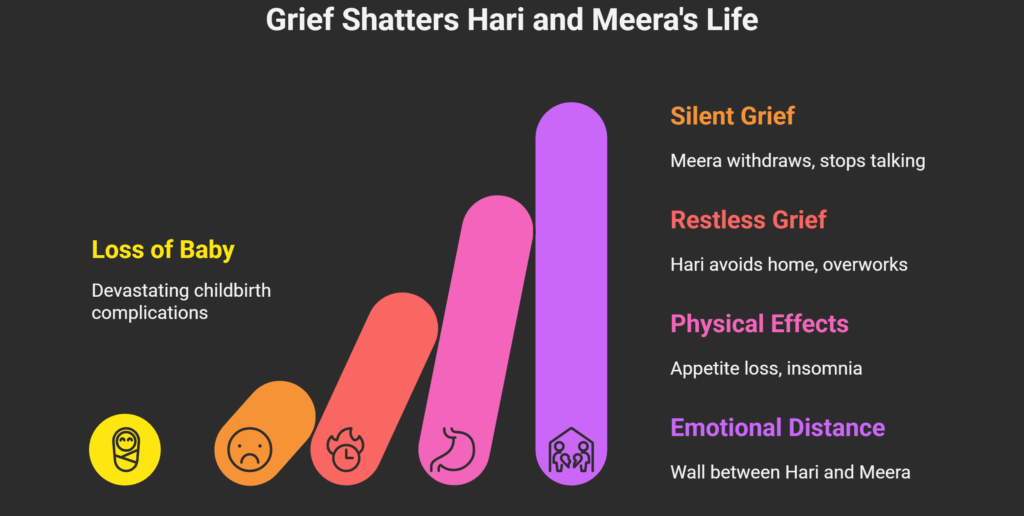
A year into their marriage, Meera became pregnant. The couple was overjoyed and spent days planning for their baby’s arrival. Meera stitched tiny clothes, and Hari painted the nursery himself. But their happiness was short-lived. Complications during childbirth led to the devastating loss of their baby. Meera survived physically, but emotionally, both she and Hari were shattered beyond words.
- After the loss, Meera stopped talking. She spent her days sitting by the window, staring at the jackfruit tree, her sewing machine untouched. She couldn’t bear to look at the clothes she had stitched for the baby. Her grief was silent but heavy, like a dark cloud that hung over the house.
- Hari, on the other hand, couldn’t sit still. He threw himself into his work, staying extra hours at school to avoid coming home. But the grief followed him everywhere. He avoided the nursery, shut the door tightly, and even started skipping his evening walks, which he and Meera used to enjoy together.
- Both experienced physical effects of grief. Meera lost her appetite and grew visibly thinner, her once radiant face pale and tired. Hari developed insomnia, tossing and turning every night, his mind replaying the moment they lost their child.
- Grief created a wall between them. Meera felt Hari didn’t understand her pain, while Hari thought Meera wasn’t noticing his silent suffering. The loss, instead of bringing them closer, pushed them apart emotionally.
- Every sound of a crying baby in the neighborhood was a knife to Meera’s heart. Every time Hari saw a student at school laugh with joy, he felt a pang of guilt for not being able to bring happiness back to his own home.
The key here is to carefully understand the situation and seek professional help accordingly. Both individuals here are going through grief. It is natural to experience grief when we lose someone so dear to us. However, grief cannot be categorized as a mental illness. That said, it is something that can cause significant emotional distress. Therefore, in such situations, seeking grief counseling and therapy in kerala can be beneficial for improving one’s mental well-being.
- For Hari and Meera, presenting their concerns to a psychologist who speaks their native language would be more effective.
- Opting for grief therapy and grief counseling sessions in Malayalam can help them view life more healthily and positively, making it easier to live and move forward.
- Online grief counseling and therapy of this kind can also assist in addressing the emotional, mental, and physical issues they are experiencing.
If you are experiencing any such difficulties, immediately book online Malayalam grief counseling and therapy with Oppam…
Grief and Malayali culture
Grief among Malayalis is a deeply emotional journey, shaped by Kerala’s rich cultural traditions, spirituality, and strong sense of community. It’s not just an individual experience but often shared with family and neighbors, with rituals and practices providing a framework for healing.
Even though grief is experienced, if it significantly impacts life and adversely affects mental health, seeking appropriate counseling is essential. Grief has a deep connection with Kerala’s traditional practices and culture. Therefore, opting for grief counseling sessions or grief therapy centers in Malayalam would be ideal.
Since it is closely tied to culture, cultural therapies can also be beneficial. A Malayali psychologist or therapist can help you effectively acknowledge and process your grief. Utilizing such resources and making efforts to improve mental health should be the first step forward.
1. Open Emotional Expression
- Malayalis are often unreserved in expressing grief. Crying, loud wailing, and openly sharing stories about the deceased are seen as natural and essential ways to process sorrow.
- Families often come together, sitting in the home of the bereaved, talking about memories, and offering comfort through their presence.
2. Community Support
- Grief in Kerala is rarely borne alone. The entire village or neighborhood often rallies around the grieving family, offering emotional and practical help.
- Relatives and neighbors visit daily, cooking meals, arranging rituals, or simply sitting in silence to provide comfort.
3. Family Bonds
- In Kerala, families are tightly knit, and grief is shared collectively. Relatives travel long distances to be present, ensuring the bereaved are not left alone.
- Elders in the family often guide the younger members through rituals and offer wisdom, creating a sense of unity and support.
4. Art and Literature as Comfort
Malayalis often turn to art and literature for solace during grief.
- The poetry of Kumaran Asan or the writings of Vaikom Muhammad Basheer explore themes of life, death, and impermanence, offering a reflective lens on loss.
- Traditional art forms like Kathakali and Theyyam sometimes incorporate stories of grief, providing both catharsis and cultural connection.
Five Stages of Grief by Kubler-Ross
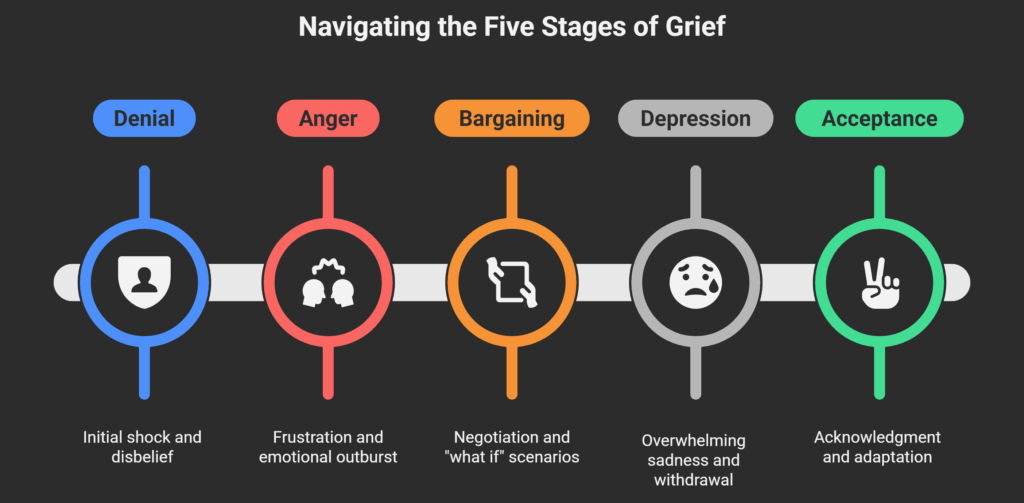
1. Denial
This is the stage where the loss feels unreal. People might struggle to accept what has happened, almost as though their mind is shielding them from the pain. It’s a way of coping with the shock, where thoughts like “This can’t be true” or “This isn’t happening” take over.
2. Anger
Once the reality of the loss starts to sink in, frustration or anger often follows. This anger can be directed at anything—yourself, others, circumstances, or even the person who passed away. It’s an emotional reaction to the unfairness of the situation.
3. Bargaining
During this stage, people might try to negotiate or make “deals” with a higher power, hoping to reverse the loss or ease the pain. It often comes with thoughts of “What if I had done things differently?” or “If only I could change this.”
4. Depression
Here, sadness becomes overwhelming. People might withdraw from others, feel hopeless, or experience a deep sense of emptiness. It’s when the weight of the loss feels heaviest, and emotions like despair and loneliness become prominent.
5. Acceptance
Acceptance isn’t about forgetting or being “okay” with the loss—it’s about reaching a point where you can acknowledge what’s happened and start adapting to life without what was lost. It’s a quieter, more peaceful stage where you begin to move forward.
Symptoms of Grief
Grief manifests in various ways, affecting both the mind and body. Here are some common symptoms of grief
- Sadness: Feeling overwhelming sorrow or emptiness.
- Anger: Frustration or resentment toward the situation, others, or even oneself.
- Guilt: Regret over things left unsaid or undone.
- Anxiety: A sense of fear or dread, worrying about life without the person or thing lost.
- Loneliness: Feeling isolated or disconnected, even in the presence of others.
- Fatigue: Feeling physically drained, even with adequate rest.
- Changes in appetite: Eating significantly more or less than usual.
- Sleep disturbances: Difficulty falling asleep, staying asleep, or sleeping too much.
- Weakened immunity: Increased susceptibility to illness due to the stress of grieving.
- Withdrawal: Avoiding social interactions or activities.
- Restlessness: Feeling unable to sit still or focus.
Grief symptoms vary widely from person to person and may come and go in waves. Some may experience all these symptoms, while others may only face a few. It’s a deeply personal journey.
Difference between Grief, Mourning, and Bereavement
| GRIEF | MOURNING | BEREAVEMENT |
|---|---|---|
|
Grief is the internal emotional experience of loss. It’s all the feelings that hit you after losing someone or something important—sadness, anger, guilt, confusion, even relief sometimes. |
Mourning is the external expression of grief—it’s how you show your grief outwardly through rituals, behaviors, or actions. Mourning is often influenced by culture, religion, or personal traditions.
|
Bereavement is the state of having experienced a loss—it’s the condition you’re in after someone dies or when something significant ends. It’s like the umbrella term for the whole experience of loss, including grief and mourning. |
|
Personal and unique to each person. |
Public or social, like wearing black, holding funerals, or observing memorial days. |
Refers to the situation, not the emotions or actions
|
|
Can be intense, messy, and unpredictable. |
Can involve rituals, ceremonies, or symbolic gestures. |
Can be short-term or long-term, depending on the loss. |
|
Happens internally—it’s what you feel, not necessarily what you show. |
Helps process grief and find closure.
|
|
|
Example: Feeling devastated after losing a loved one, crying alone, or experiencing waves of sadness when you’re reminded of them. |
Example: Attending a funeral, lighting a candle for someone, or observing a mourning period like shraadh in Indian culture.
|
Example: Saying, “I’m bereaved after losing my father” means you’re in a state of loss, which may involve both grief and mourning.
|
William Worden’s Four Tasks of Mourning
This framework is all about actively working through grief rather than passively “waiting” for it to fade. Worden believed that grieving is a process with specific tasks that help individuals adjust to life after a loss. Here’s the breakdown:
1. Accept the Reality of the Loss
- What it means: Fully acknowledging that the person (or thing) you lost is gone and won’t be coming back. This can be hard, especially if there’s disbelief or denial.
- Why it’s important: Denial delays healing. Accepting the loss is the first step toward moving forward.
- Example: Saying goodbye at a funeral, sorting through belongings, or talking openly about the loss.
2. Process the Pain of Grief
- What it means: Allowing yourself to feel the emotions tied to the loss—whether it’s sadness, anger, guilt, loneliness, or even relief.
- Why it’s important: Bottling up or avoiding pain can lead to unresolved grief, which might surface later in unhealthy ways.
- Example: Crying, journaling, talking to a therapist, or finding other ways to express your feelings.
3. Adjust to a World Without the Deceased
- What it means: Learning to navigate life without the presence of what’s been lost—whether that’s emotionally, practically, or socially.
- Why it’s important: Loss often changes routines, roles, and relationships. Adjusting helps you regain stability and find a new sense of normal.
- Example: Taking on responsibilities your loved one used to handle, finding new social connections, or rebuilding your identity.
4. Find an Enduring Connection While Moving Forward
- What it means: Finding a way to remember and honor your loved one while continuing to live your life. It’s about carrying the love and memories with you, without letting them hold you back.
- Why it’s important: Moving forward doesn’t mean forgetting—it’s about creating a meaningful way to keep them in your heart.
- Example: Creating a memorial, sharing their stories, or continuing traditions they valued.
All humans experience intense emotional distress when someone they deeply care about leaves them. This is a common response. However, if you feel that this is negatively affecting your life, the most important step you can take is to seek the necessary grief counseling and therapy.
Therefore, instead of feeling that your life should end in sorrow after losing someone who left you, it’s important to prioritize your mental health and move forward.
Struggling?
Talk to an Oppam Therapist
Get the Support You Deserve Online & Confidential