Online counselling for new Malayali mothers is becoming a vital lifeline in Kerala, Recently, the news that has been prevalent in Kerala, far and wide, is about women’s suicides and domestic violence. In a situation where the rate of such incidents is increasing, it is essential to conduct large-scale awareness programs. When a woman steps into a life she desires, she may face unexpected abuse and torture from her husband’s family, and if she doesn’t receive proper support from her own family, she may become mentally drained. This can lead her to feel like there’s nothing left to gain in life, nothing positive will happen, and eventually, it may drive her to suicide.
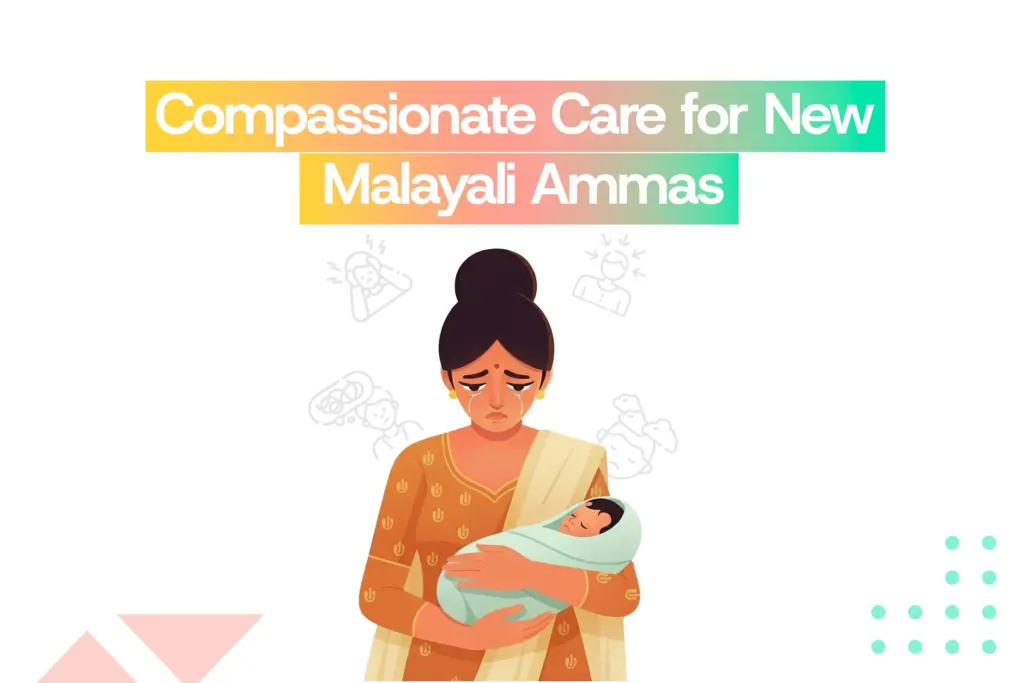
Meet Priya, a 28-year-old new mom living in Kerala. She’s a stay-at-home mom to a 3-month-old baby boy. Despite her loving family and supportive husband, Priya feels overwhelmed and isolated.
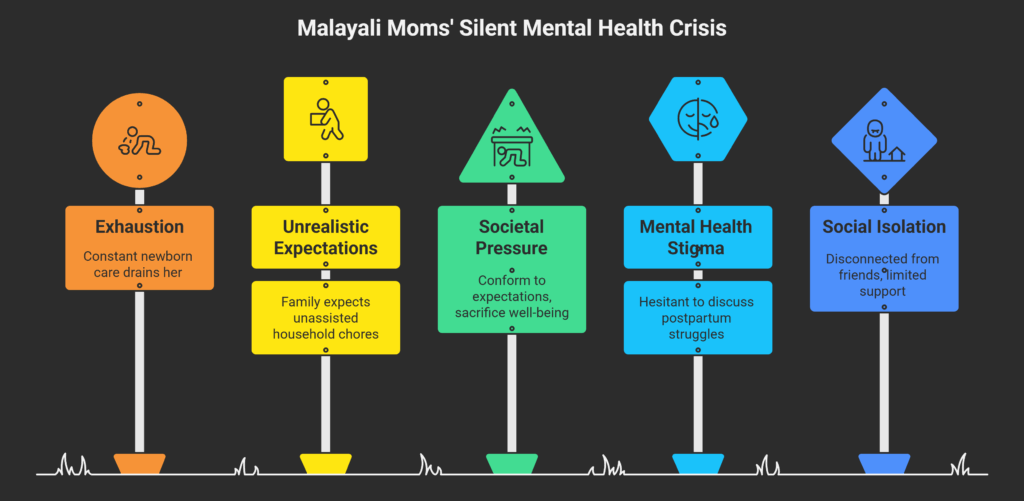
- Priya is exhausted from caring for her newborn around the clock. She’s struggling to manage her responsibilities and feels like she’s losing herself in the process.
- Her family and in-laws expect her to manage the household chores and care for the baby without any help.
- She’s feeling pressured to conform to these expectations, even if it means sacrificing her own well-being.
- she is struggling with postpartum depression and anxiety, but she’s hesitant to talk about it with her family or friends due to the stigma surrounding mental health issues in her community.
- Priya feels isolated and disconnected from her friends and social network. She’s a stay-at-home mom, and her husband is busy with work, leaving her with limited opportunities to connect with others.
- She also feels pressure to conform to traditional expectations around motherhood, such as breastfeeding and childcare. She’s struggling to find her own way and make decisions that work best for her and her baby.
The problems faced by Malayali women in society are numerous. Unfortunately, the mindset among Malayalis has not yet changed to allow for open discussion and conversation about these issues. However, it is essential to understand that talking openly about these problems and adopting scientific approaches to address them can significantly improve one’s mental state. Only by reaching such a stage can we truly understand and provide the necessary support to women facing these issues.
Let’s strive to create a culture that fosters open conversations about mental health, encourages empathy and understanding, and supports those who are struggling through counseling and therapy in kerala, women can be brought back to life.
To learn more about the issues faced by new mothers and the silent struggles they experience, read on…
A woman often experiences the most mental distress after marriage. A new environment, new people, new lifestyle, and new responsibilities can all contribute to her struggles. However, many women tend to overcome these challenges and adapt to the new circumstances.
- But the recent news from Kerala is not very encouraging. The lack of proper support and mental stress are the main reasons for most of these problems.
- The way society views women also plays a role. Women are often expected to be perfect wives and mothers, which can put a lot of pressure on them and lead to mental health issues.
- The issue of postpartum depression that women experience after becoming mothers is also relevant here.
- Many people lack awareness about this condition and often blame or dismiss the mother. Malayali mothers and women face many such problems.
Online counselling for new Malayali mothers is becoming a vital lifeline in Kerala, Recently, the news that has been prevalent in Kerala, far and wide, is about women’s suicides and domestic violence. In a situation where the rate of such incidents is increasing, it is essential to conduct large-scale awareness programs. When a woman steps into a life she desires, she may face unexpected abuse and torture from her husband’s family, and if she doesn’t receive proper support from her own family, she may become mentally drained. This can lead her to feel like there’s nothing left to gain in life, nothing positive will happen, and eventually, it may drive her to suicide.
Meet Priya, a 28-year-old new mom living in Kerala. She’s a stay-at-home mom to a 3-month-old baby boy. Despite her loving family and supportive husband, Priya feels overwhelmed and isolated.
Need to Talk to Someone?
Book a private online session with a licensed therapist
What can be done is to provide awareness to women, families, and society, and to provide proper counseling and necessary support to women who are experiencing mental health issues. The main component of healing is not silence, but providing support to them.
1. Lack of Support
New mothers face many responsibilities and challenges.
- For a woman who is becoming a mother for the first time, she will have to face many responsibilities. It’s essential to approach things with patience and understanding.
- However, due to societal norms, there is a general expectation that women should quickly take on childcare responsibilities and manage the household efficiently. This can lead to significant problems.
- At this stage, emotional support from family and society is crucial for women. However, the reality is that many new mothers do not receive this kind of support in their homes.
2. Cultural Expectation
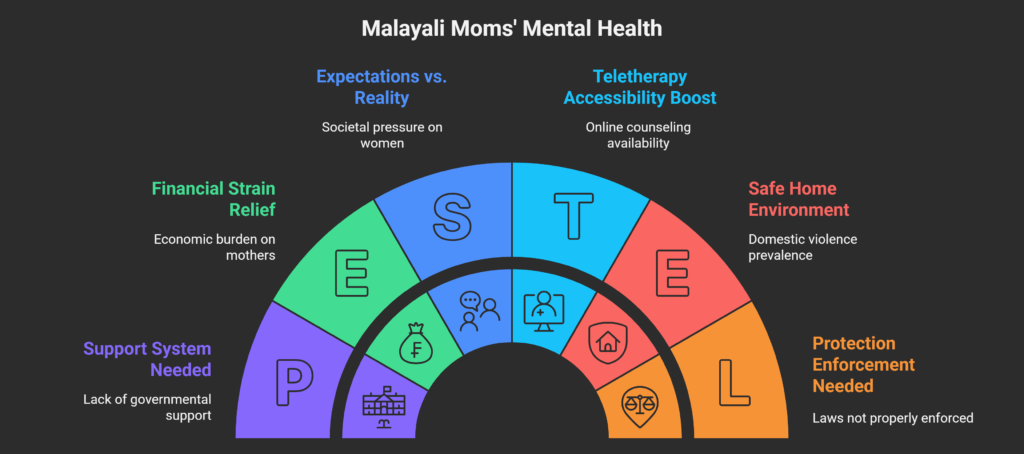
The Malayali perspective on family is very clear.
- Women are expected to prioritize their family above all else, endure any hardship for the sake of their family, and tolerate abuse from their husband’s family.
- This is the culturally accepted notion of what a woman should be. The same perspective applies to new mothers.
- Women who are trapped in these expectations and stereotypes often feel overwhelmed and experience significant stress.
- Women who try to meet these expectations may face anxiety, depression, and even suicidal thoughts.
Today, numerous online counseling options are available to assist you. By utilizing cultural therapy and online counselling or online therapy sessions effectively, you can improve your mental health. This way, a joyful motherhood awaits you.
3. Social Isolation
For a new mother, societal expectations can be overwhelming, and she may struggle to cope with the demands placed upon her.
- If she doesn’t receive adequate support with childcare, she may feel like she has to do everything on her own.
- This can lead to a situation where she is unable to participate in her social networks or communities, and enjoy her own life.
- Many mothers end up staying at home to care for their children, which can lead to feelings of disconnection from others and a loss of social life. This can be a significant source of distress for mothers.
Today, numerous online counseling options are available to assist you. By utilizing Malayali therapist for anxiety, Malayali therapist for depression, Malayali counselor for stress effectively, you can improve your mental health. This way, a joyful motherhood awaits you.
Many new mothers struggle with mental health issues, including postpartum depression, due to the added responsibilities and expectations.
- It’s essential to understand and support their mental state. However, the lack of support often leads to significant mental distress.
- Women may struggle to address these issues or seek proper mental health support due to the stigma surrounding mental health.
- Although some husbands are taking responsibility for seeking professional help, the stigma still persists in many places.
- Women experiencing postpartum depression often face hurtful comments and criticism, such as being told they don’t love their child or that they’re not a good mother. The societal tendency to belittle or mock these issues can prevent mothers from seeking help.
- Despite the growing awareness, many new mothers in Kerala still face these challenges. It’s essential to understand and approach these issues professionally.
With proper counseling and therapy, motherhood can be enjoyable. Team Oppam offers counseling services, online counseling, and Malayali psychologists who provide support in Malayalam.
5. Pressure to Conform
In addition to these challenges, new Malayali mothers also face pressure to conform to traditional practices and expectations.
- With the availability of scientific knowledge on motherhood, many mothers are now aware of the best practices to follow.
- However, when they deviate from traditional methods, they often face criticism and judgment.
- This pressure to conform can be overwhelming, not just in terms of childcare, but also in terms of household responsibilities, personal life, and professional life.
- The constant opinions and intrusions can cause significant mental distress for Malayali women.
Today, numerous online counseling options are available to assist you. Oppam offers you Malayali therapist for anxiety, Malayali therapist for depression, Malayali counselor for stress effectively, you can improve your mental health. This way, a joyful motherhood awaits you.
6. Domestic Violence
Domestic violence is a significant issue among Malayalis today. Societal attitudes play a major role in perpetuating this problem.
- Many women and mothers suffer abuse at the hands of their husbands and in-laws. The number of women who resort to suicide along with their children is also increasing.
- Often, this issue is not addressed properly, and despite existing laws, a healthy social environment that allows women to break free from these relationships is lacking.
- As a result, many women remain silent, and even when they try to discuss the issue with their families, the response is often not supportive.
- This silence can lead to significant mental distress and even suicidal thoughts.If you’re experiencing such problems, don’t hesitate to seek legal help, leave the relationship, and prioritize your mental health.
The mental trauma caused by domestic violence is immense. Online counseling and therapy can be beneficial. For new mothers, Malayali therapy sessions and Malayali psychologists are available to provide support.
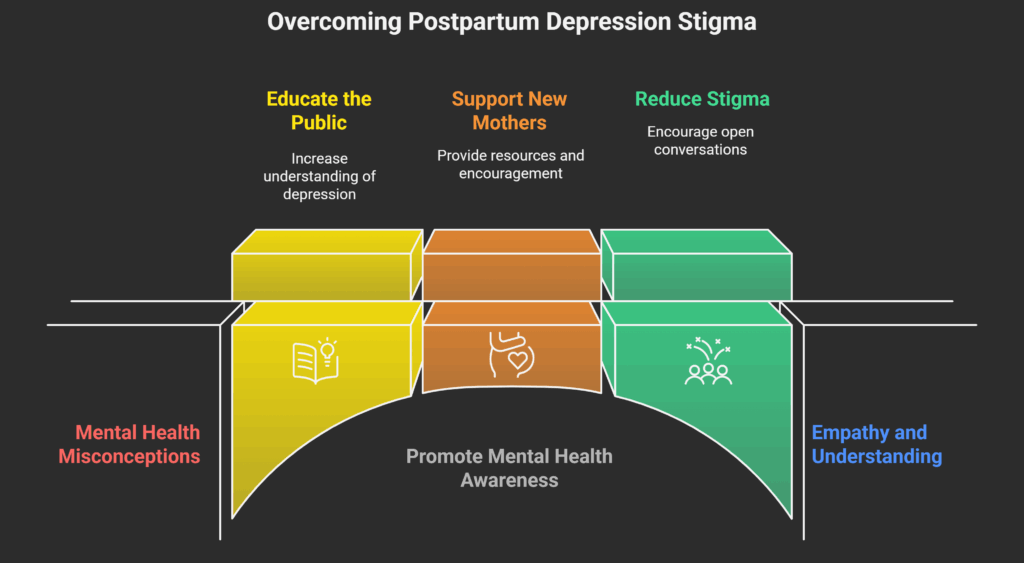
The reality show ‘India got latent’ has been a platform for numerous controversies, offensive, and sensitive comments. A recent video showcased a woman making a comment that perpetuates a massive misconception about mental health and depression.
The comment was, “Now that Deepika Padukone is a mother, she will finally understand what depression is.” The audience laughed and applauded, but this is a concerning reflection of how lightly we take mental health issues.
- Becoming a mother can be a life-changing experience, and while many people enjoy it, some face significant challenges.
- Postpartum depression is a real condition that affects some new mothers, causing them to experience symptoms like detachment from their baby, overwhelming sadness, and suicidal thoughts.
- Depression is not something to be taken lightly or joked about. It’s a serious mental health condition that requires proper treatment and support. We need to stop perpetuating misconceptions and stigmatizing mental health issues.
- Instead of mocking or judging those who open up about their mental health struggles, we should be supporting and encouraging them.
Let’s work towards creating a society that promotes awareness, understanding, and empathy towards mental health issues. We need to recognize that depression is a serious condition that affects people from all walks of life, regardless of their circumstances. It’s not something that can be simply ‘snapped out of’ or overcome with willpower.
Postpartum depression is a complex and multifaceted mental health condition that affects many new mothers. It is characterized by feelings of sadness, hopelessness, and anxiety that can interfere with a mother’s ability to care for herself and her baby.
Causes and Risk Factors:
- Hormonal changes: The sudden drop in estrogen and progesterone levels after childbirth can contribute to PPD.
- Sleep deprivation: Lack of sleep and disrupted sleep patterns can exacerbate symptoms.
- Stress and anxiety: The added responsibilities and stress of caring for a new baby can contribute to PPD.
- History of depression or anxiety: Women with a history of depression or anxiety are more likely to experience PPD.
- Lack of support: Insufficient support from family, friends, or healthcare providers can increase the risk of PPD.
Symptoms:
- Persistent feelings of sadness and hopelessness
- Anxiety and worry
- Difficulty bonding with the baby
- Changes in appetite or sleep patterns
- Fatigue and loss of energy
- Irritability and mood swings
- Difficulty concentrating or making decisions
Effects on Mother and Baby:
- Impact on mother-baby bonding: PPD can affect a mother’s ability to bond with her baby, which can have long-term effects on the child’s emotional and social development.
- Increased risk of anxiety and depression in children: Children of mothers with PPD may be more likely to experience anxiety and depression themselves.
- Impact on mother’s physical health: PPD can affect a mother’s physical health, including her ability to care for herself and her baby.
Treatment and Support:
- Online counseling and therapy: Online resources can provide convenient and accessible support for new mothers.
- Mental health professionals: Working with a mental health professional can provide personalized support and guidance.
- Support groups: Joining a support group can provide a sense of community and connection with others.
- Self-care: Prioritizing self-care, including rest, exercise, and healthy eating, can help alleviate symptoms.
Importance of Seeking Help:
- Don’t suffer in silence: PPD is a treatable condition, and seeking help is essential.
- Prioritize mental health: Taking care of mental health is just as important as physical health.
- Break the stigma: Seeking help for PPD can help break the stigma surrounding mental health issues.
Why Many Women Don't Speak Up:
There are various reasons why many women don’t speak up, including:
- Fear of Judgment: Women may fear being judged, criticized, or labeled as “difficult” or “emotional” if they express their thoughts or feelings.
- Societal Expectations: Women are often socialized to prioritize others’ needs over their own and to be nurturing and accommodating. This can make it difficult for them to assert themselves and express their own needs.
- Power Dynamics: Women may feel powerless or marginalized in certain situations, making it difficult for them to speak up or be heard.
- Cultural Norms: Cultural norms and expectations can silence women, particularly in patriarchal societies where women’s voices are often not valued or respected.
- Fear of Retaliation: Women may fear retaliation or consequences if they speak up, such as losing their job, being ostracized by their community, or experiencing physical or emotional harm.
- Internalized Oppression: Women may internalize societal messages that they are not worthy or capable, leading to self-doubt and silence.
- Lack of Support: Women may not have a supportive network of friends, family, or colleagues who will listen to and validate their experiences.
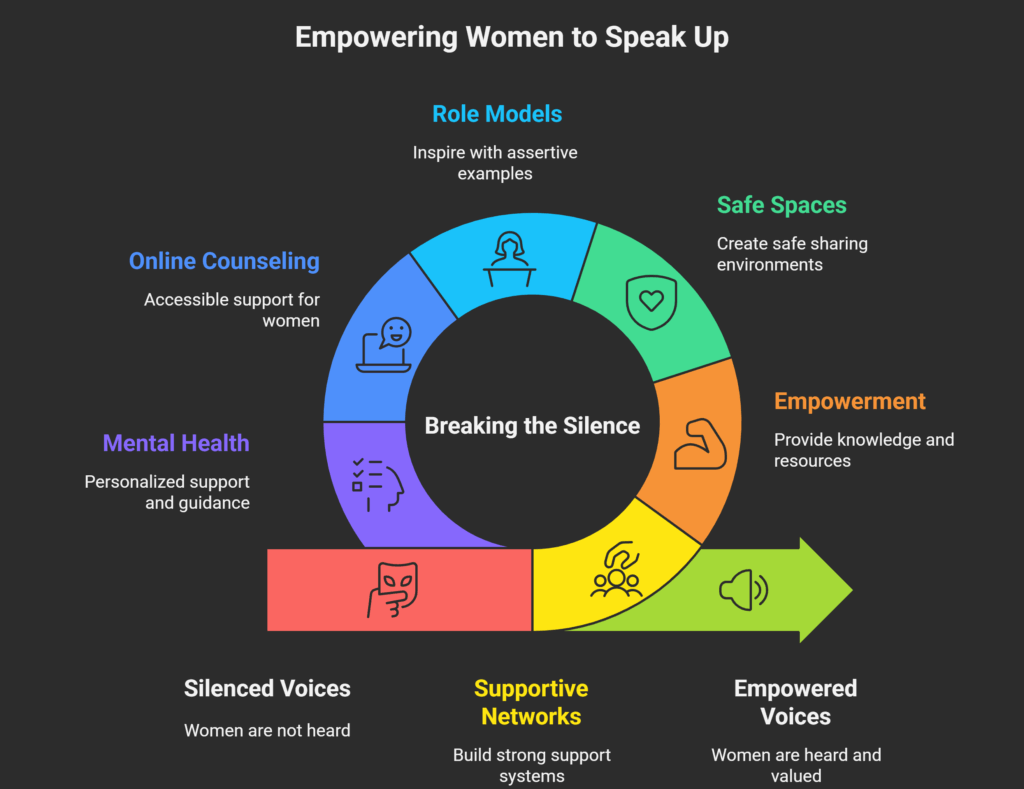
Consequences of Not Speaking Up:
- Emotional Distress: Not speaking up can lead to feelings of frustration, anger, and resentment.
- Loss of Autonomy: Women may feel like they’re losing control over their lives and decisions.
- Damaged Relationships: Not speaking up can lead to damaged relationships and feelings of resentment towards others.
- Missed Opportunities: Women may miss out on opportunities for personal and professional growth if they don’t speak up.
Breaking the Silence:
- Supportive Networks: Building supportive networks of friends, family, and colleagues can provide women with the courage and confidence to speak up.
- Empowerment: Empowering women with knowledge, skills, and resources can help them feel more confident and capable of speaking up.
- Safe Spaces: Creating safe spaces for women to share their experiences and feelings can help them feel heard and validated.
- Role Models: Having role models who speak up and assert themselves can inspire and empower women to do the same.
- Online counseling and therapy: Online resources can provide convenient and accessible support for new mothers.
- Mental health professionals: Working with a mental health professional can provide personalized support and guidance.
By understanding the reasons why many women don’t speak up, we can work to create a more supportive and empowering environment that encourages women to express themselves and be heard.
After childbirth, women may experience a range of emotions, from joy and excitement to anxiety and overwhelm. While it’s normal to feel emotional after having a baby, some women may experience more severe emotional distress. Here are some signs to look out for:
- Mood Swings: Feeling extremely sad, anxious, or irritable, often accompanied by crying spells.
- Anxiety and Worry: Excessive worry about the baby’s health, safety, or well-being, or feeling anxious about motherhood.
- Feeling Overwhelmed: Feeling like you’re unable to cope with the demands of motherhood, or feeling like you’re losing control.
- Loss of Interest in Activities: Losing interest in activities that you previously enjoyed, or feeling disconnected from friends and family.
- Changes in Appetite or Sleep: Changes in appetite or sleep patterns, such as insomnia or hypersomnia.
- Physical Symptoms: Physical symptoms like headaches, muscle pain, or stomach problems.
- Feeling Guilty or Inadequate: Feeling guilty or inadequate as a mother, or feeling like you’re not doing enough.
- Difficulty Bonding: Difficulty bonding with the baby, or feeling disconnected from the baby.
- Thoughts of Self-Harm: Thoughts of self-harm or suicide, which is a serious sign of emotional distress.
Types of Emotional Distress:
- Postpartum Blues: A mild and temporary condition characterized by mood swings, anxiety, and feelings of overwhelm.
- Postpartum Depression (PPD): A more severe and long-lasting condition characterized by feelings of sadness, anxiety, and hopelessness.
- Postpartum Anxiety (PPA): A condition characterized by excessive worry, anxiety, and fear about the baby’s health and safety.
- Postpartum Psychosis: A rare but serious condition characterized by hallucinations, delusions, and disconnection from reality.
Feeling Overwhelmed?
You’re Not Alone. Get Support from an
Oppam Therapist Wherever You Are
Oppam Therapist Wherever You Are
What to Do:
- Seek professional Support: Reach out to your healthcare provider, a therapist, or a support group for help and guidance.
- Talk to Someone: Talk to a trusted friend, family member, or partner about how you’re feeling.
- Prioritize Self-Care: Prioritize self-care activities, such as rest, exercise, and healthy eating.
New mothers face numerous challenges, and the Malayali culture plays a significant role in it. Cultural therapy in Malayalam can be beneficial in such situations. It’s essential to openly address the difficulties and seek necessary support. We understand that facing these issues without any support can be overwhelming for new mothers. Moving forward without mental strain is a bold decision we can make in such situations.
To reach that point, mental support is essential. If you’re facing such difficulties, don’t hesitate or waste time – seek online counseling or therapy. You may want a safe, private, and culturally relevant mental health facility to discuss these issues openly. Online counseling for Malayali women, online counseling for new Malayali mothers, and postpartum support counseling are just a few options available with Oppam.
Struggling?
Talk to an Oppam Therapist
Get the Support You Deserve Online & Confidential