Top 10 Most Common Mental Health Disorders affect millions of people worldwide and can significantly impact quality of life if left untreated. According to the World Health Organization (WHO), a mental disorder is characterized by a clinically significant disturbance in an individual’s cognition, emotional regulation, or behavior. It is typically associated with distress or impairment in important areas of functioning.
Mental health is an area that often doesn’t receive enough attention in society. There are many reasons for this. The stigma surrounding mental health today still stems from misconceptions people had about it in the past. However, the mental health field has grown significantly in terms of treatment methods and patient care. Research is ongoing to understand the causes and remedies for various mental illnesses, and treatment is available for many conditions.
When people think of mental illness, they often associate it with being “insane” or “mad.” The stereotypical image is of someone with unkempt, matted hair, A dirty appearance, torn clothing, Unpredictable behavior, such as laughing or crying to themselves, talking to themselves, or becoming violent without reason. A mix of negative emotions, including Contempt, Disgust, Anger, Ridicule, Distrust, Indifference, and Pity, often accompanies this perception. This stigma can lead to misunderstandings and negative attitudes towards people with mental health conditions.
Misconceptions about mental illness have been prevalent for centuries. In the past, practices like trephining (drilling holes in the skull) were used to “exorcise evil spirits. During the Dark Ages in Europe (15th-16th centuries), many people with mental illnesses were labeled as witches, accused of making pacts with the devil, and subjected to torture and execution. This dark history highlights the need to challenge stigma and promote understanding and compassion for individuals with mental health conditions.
The root cause of such tragedies is the lack of awareness about the significant advancements in mental health treatment over the past half-century. Most mental illnesses are treatable, and with Proper care, Medication adherence, and Rehabilitation efforts. It’s possible to help individuals recover and reintegrate into mainstream society. How to get mental health help in Kerala
Need to Talk to Someone?
Book a private online session with a licensed therapist
It’s essential to dispel misconceptions about mental health and approach it healthily. Understanding mental illnesses accurately, recognizing that they can be resolved, and spreading awareness to others are crucial steps. Everyone needs to recognize that mental health is a right and seek necessary treatment to achieve it. Where to Get Mental Health Help in Kerala
A study published in The Lancet today said according to estimates, 38.1 million healthy life years will be lost to mental illness in India by 2025, which is a 23% increase from the data of 2013.
Read on to understand some of the most important mental illnesses..
Common mental health disorders
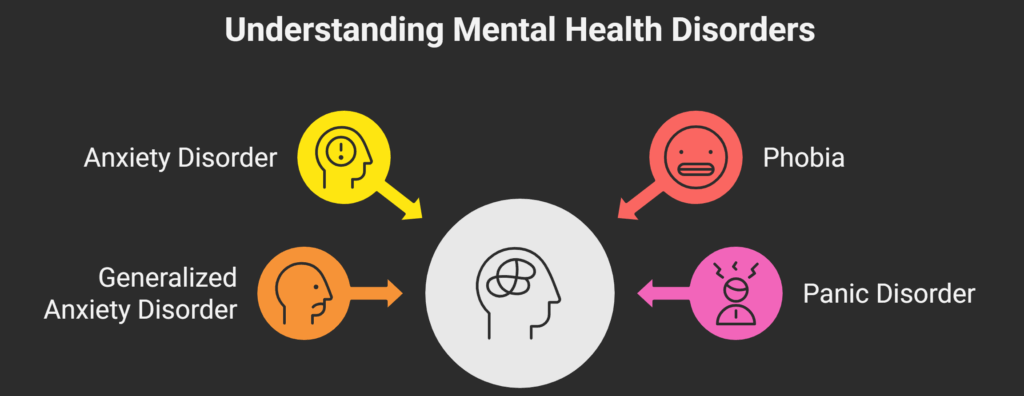
Mental disorders, like other illnesses, are categorized in various ways. While the classification system can be complex, a simplified approach is to divide them into:
Each of these categories has several subcategories. This basic framework helps in understanding the broad spectrum of mental health conditions.
The International Classification of Diseases (ICD) and the Diagnostic and Statistical Manual of Mental Disorders (DSM) are two classification systems used to categorize mental disorders. Given their complexity, it’s helpful to understand them through a simplified framework, such as the one mentioned earlier.
Anxiety disorder is a mental health condition characterized by excessive and persistent feelings of fear, worry, or anxiety that interfere with daily life. Symptoms can include:
- Restlessness and feeling on edge
- Difficulty concentrating
- Irritability
- Muscle tension
- Sleep disturbances
Anxiety disorders can take many forms, such as generalized anxiety disorder(GAD), panic disorder, social anxiety disorder, and phobias. Mental health care services
Phobia is characterized by an intense, irrational fear or anxiety triggered by a specific situation, object, or environment that poses no real danger. This fear leads to avoidance behaviors. Phobias can be categorized into three main types given below, Best counsellors in Kerala for anxiety
Agoraphobia and specific phobia are more common in women. Social phobia affects both men and women equally.
People with phobias often try to avoid situations that trigger anxiety. If unavoidable, they endure the situation with great distress.
Agoraphobia: Fear of Public Places
Agoraphobia is characterized by intense anxiety or fear in situations such as, mental health treatment in Kerala
- Being in open spaces or crowded areas alone
- Traveling in crowded buses or trains
- Being in situations where escape might be difficult
The core fear is the feeling of being trapped or unable to escape from a situation that triggers anxiety. Common symptoms include:
- Extreme panic in crowded places, public areas, or while traveling alone
- Physical symptoms like rapid heartbeat, sweating, dry mouth, and trembling
- Fear of fainting or losing control
- Feeling anxious or panicked when alone in public places
- Relief when accompanied by someone trusted
- Avoidance of situations that trigger anxiety, often leading to staying at home.
Specific Phobia: Fear of Specific Objects or Situations
Specific phobia is characterized by an intense fear or anxiety triggered by a specific object, situation, or experience. Mental health services Kozhikode. This fear leads to avoidance behaviors. Common symptoms include:
- Anxiety symptoms like rapid heartbeat, sweating, shortness of breath, and dry mouth
- Presence of the feared object or situation triggers symptoms.
- Avoidance of the feared object or situation to prevent anxiety
Specific phobias often begin at a young age and may resolve on their own. However, if the phobia develops later in life, it may persist. Kerala counselling support. Specific phobias are named based on the object or situation that triggers the fear, such as:
- Claustrophobia (fear of enclosed spaces)
- Acrophobia (fear of heights)
- Animal phobia (fear of animals)
- Examination phobia (fear of exams)
- Xenophobia (fear of strangers or foreigners)
Social Phobia: Fear of Social Situations
Social phobia is characterized by intense anxiety or fear in social situations, such as:
- Being observed by others
- Interacting with others (e.g., conversations, public speaking)
- Performing tasks in public (e.g., cashing a check at a bank)
The main symptoms include:
- Intense anxiety and nervousness in social situations
- Avoidance of situations that trigger anxiety
- Social isolation due to avoidance behaviors
- Difficulty forming and maintaining personal and social relationships
Social phobia often begins in adolescence and can worsen if left untreated, leading to:
- Complete social isolation
- Agoraphobia-like behavior (avoiding leaving home)
- Debilitating symptoms that impact daily life
2.Generalized Anxiety Disorder (GAD)
GAD is characterized by persistent and excessive worry about everyday things, even when there is no apparent reason to worry. People with GAD:
- Feel constantly “on edge” or anxious
- Worry about various things, such as relationships, health, finances, or the future
Experience physical symptoms like:
- Muscle tension
- Restlessness
- Sleep disturbances
- Rapid heartbeat
- Sweating
- Trembling
- May become
May become overwhelmed by minor concerns, such as:
- Worrying about catching a bus
- Fearing a trip might not go as planned
- Excessively worrying about meeting someone
GAD can interfere with daily life, making it difficult to function normally. Symptoms can start at any age, but often begin in adolescence or young adulthood. If left untreated, GAD can lead to significant distress and impairment in daily life. Mental health awareness Kerala
People with GAD may seek help from various medical specialists due to physical symptoms, rather than mental health professionals. Proper treatment is essential to manage symptoms and improve quality of life.
Panic disorder is characterized by recurring panic attacks, which are intense episodes of fear or anxiety that peak within minutes and include symptoms such as:
- Rapid heartbeat
- Shortness of breath
- Dizziness
- Fear of losing control or dying
- Numbness or tingling
Panic attacks can occur at any time, and the fear of having another attack (anticipatory anxiety) can be a significant aspect of the disorder. Panic disorder can occur with or without agoraphobia (fear of public places).
Panic symptoms can also be associated with other mental health conditions, such as depression, schizophrenia, and OCD. Additionally, some medical conditions (e.g., heart disease, hyperthyroidism, hypoglycemia) and substance use (e.g., caffeine, nicotine, amphetamines) can trigger panic-like symptoms.
It’s essential to seek professional help to accurately diagnose and treat panic disorder, as it can significantly impact daily life.
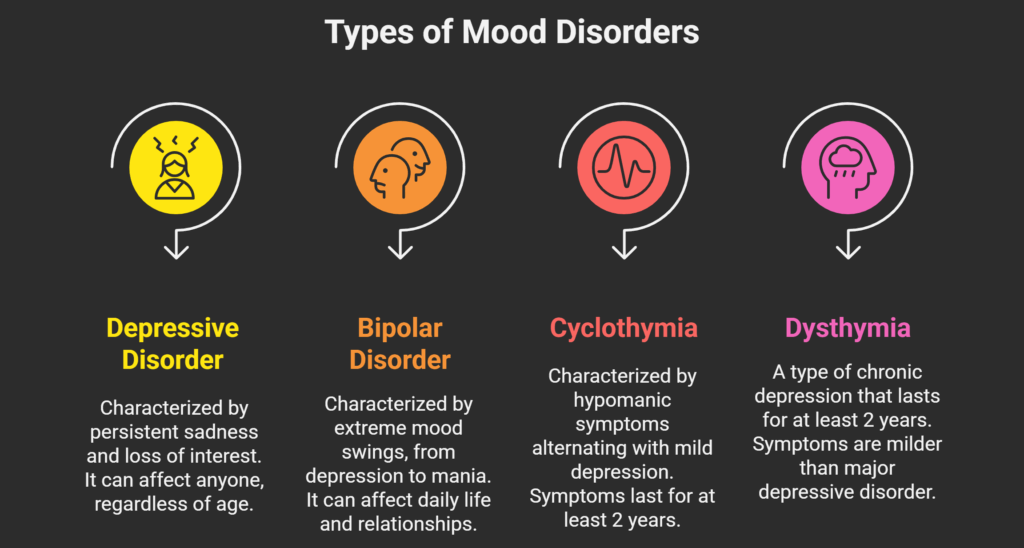
Mood disorders are mental health conditions that affect a person’s emotional state, leading to extreme mood swings or persistent feelings of sadness or irritability. These disorders can impact daily life, relationships, and overall well-being.
Depression is a universal human emotion that everyone experiences at some point in their lives. Many people feel sad or depressed in response to difficult situations, such as loss, grief, or guilt. However, not everyone who experiences these feelings has a depressive disorder.
where do we draw the line between a normal emotional response and a depressive disorder? How can we identify depression?
Depression has been documented throughout history, with references to it found in ancient texts such as the Old Testament (King Solomon) and Hindu epics like the Mahabharata (Arjuna) and Ramayana (Dasharatha).
Studies suggest that 4-8% of the population suffers from depression, making it a significant mental health concern. According to the World Health Organization (WHO), depression is the fourth leading cause of disability worldwide and is expected to become the second leading cause of disability by 2030, surpassed only by heart disease.
Feeling Overwhelmed?
You’re Not Alone. Get Support from an
Oppam Therapist Wherever You Are
Oppam Therapist Wherever You Are
Depression is a serious condition that can have devastating consequences, including:
- 15% of people with depression die by suicide
- Many more attempt suicide
- Depression can affect anyone, regardless of age, but it often starts between 30-40 years old
- Recent studies show an increase in depression among people under 20
- Women are three times more likely to experience depression than men, possibly due to hormonal differences, reproductive life events, and societal expectations
- Loss of interest: Loss of pleasure in activities that were once enjoyed.
- Emotional numbing: Inability to respond emotionally, feeling sad or tearful without reason, or having suicidal thoughts.
- Sleep disturbances: Waking up early in the morning, typically 2 hours or more before the usual wake-up time.
- Diurnal variation: Symptoms are worse in the morning and improve as the day progresses.
- Psychomotor retardation: Noticeable slowing down of physical and mental activities.
- Loss of appetite: Significant decrease in appetite.
- Weight loss: Significant weight loss, typically 5% or more of body weight in a month.
- Loss of libido: Significant decrease or loss of interest in sex.
Bipolar disorder is a mental health condition characterized by extreme mood swings, ranging from depression to mania. People with bipolar disorder may experience alternating episodes of depression and mania, which can affect their daily life and relationships.
Some notable individuals who have had bipolar disorder include Abraham Lincoln, Theodore Roosevelt, Winston Churchill, Ernest Hemingway, and Virginia Woolf.
If you’ve seen the movie “Vadakkumnathan” starring Mohanlal, you might have gained some insight into Bipolar Disorder. The film portrays the complexities and mental struggles experienced by Mohanlal’s character, as well as the impact it has on his life and relationships.
According to population estimates, approximately 3 lakh people in Kerala may be affected by this condition. Bipolar disorder affects men and women equally, and it can start at any age, although it typically begins between 20-30 years old. Mental health counselling Kerala
Symptoms of mania include:
- Excessive happiness or irritability
- Increased energy and activity
- Grandiose thoughts or feelings of being invincible
- Talkativeness and sociability
- Impulsive behavior, such as excessive spending or reckless decisions
- Reduced need for sleep and food
- Increased libido
Symptoms of depression include:
- Persistent sadness or hopelessness
- Loss of interest in activities
- Changes in appetite or sleep patterns
- Fatigue or loss of energy
Bipolar disorder can manifest in different ways, including:
- Manic episodes only
- Alternating episodes of mania and depression
- Mixed episodes, where symptoms of both mania and depression occur simultaneously
If left untreated, bipolar disorder can lead to recurring episodes, with decreasing intervals of normal mood. The likelihood of future episodes increases with each episode, with a 50% chance of recurrence after the first episode, 90% after the second episode, and nearly 100% after the third episode. Kerala psychologists
Cyclothymia, also known as cyclothymic disorder, is a mental health condition characterized by periods of hypomanic symptoms alternating with periods of mild depression. The symptoms are not severe enough to meet the diagnostic requirements for a full-blown manic or depressive episode, but they can still significantly impact daily life.
Key features:
- Periods of hypomanic symptoms (e.g., increased energy, talkativeness, and impulsivity)
- Periods of mild depressive symptoms (e.g., low mood, decreased energy, and changes in appetite or sleep)
- Symptoms last for at least 2 years (1 year in children and adolescents)
- Symptoms cause significant distress or impairment in social, occupational, or other areas of life
4.Dysthymia
Dysthymia, also known as persistent depressive disorder, is a type of chronic depression that lasts for at least 2 years. The symptoms are typically milder than those of major depressive disorder, but they can still significantly impact daily life. Malayalam counselling support online
Key features:
- Persistent low mood or sadness
- Loss of interest in activities
- Changes in appetite or sleep patterns
- Fatigue or low energy
- Difficulty concentrating or making decisions
- Feelings of hopelessness or pessimism
- Symptoms last for at least 2 years
- Symptoms cause significant distress or impairment in social, occupational, or other areas of life
Both cyclothymia and dysthymia can be challenging to diagnose and treat, but with proper care and support, individuals can manage their symptoms and improve their quality of life. Affordable mental health treatment in Kerala
3. Obsessive-Compulsive Disorder (OCD)
We all have our own unique ways of doing things in our daily lives. For example, we might follow a specific routine, such as taking a particular route to work or school, spending free time in a certain way, or reading specific sections of the newspaper first. Many people can provide clear reasons for these habits. However, some individuals experience these habits and routines to an extreme degree. Where to get counselling support in Kerala
Some people might feel compelled to wash their hands 40 times a day, while others might repeatedly check if the gas is turned off, unable to leave their house without doing so. Many individuals experience anxiety that something terrible will happen if they don’t follow their specific routines. This is known as Obsessive-Compulsive Disorder (OCD).
OCD can cause individuals to experience recurring, intrusive thoughts (obsessions) or feel compelled to perform specific rituals or behaviors (compulsions) repeatedly. These symptoms can significantly impact daily life and cause distress.
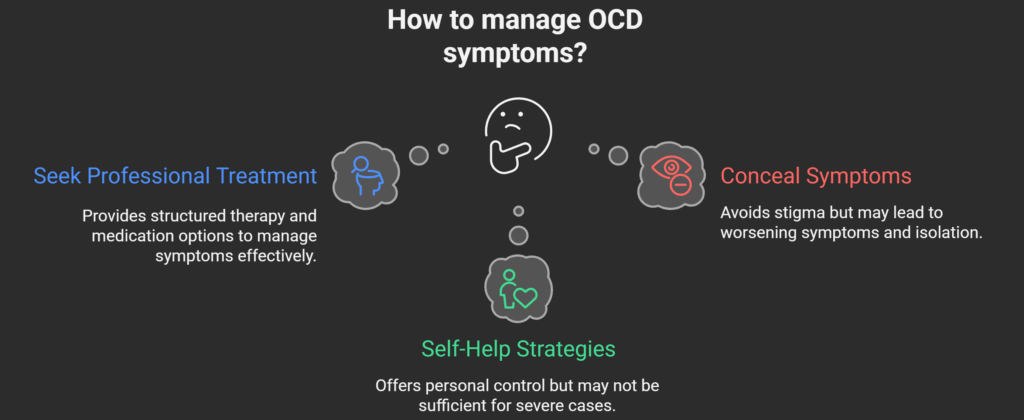
Recent studies suggest that at least 5% of the population suffers from Obsessive-Compulsive Disorder (OCD). However, many individuals conceal their problems, believing it’s not a legitimate illness, and as a result, they don’t receive proper treatment.
Fortunately, there have been revolutionary changes in our understanding and treatment of OCD in recent times. This increased awareness and advancements in treatment options offer hope for those affected by OCD.
If you’ve seen the movie “North 24 Kaatham” starring Fahadh Faasil, you might have gained some insight into Obsessive-Compulsive Disorder (OCD). The repetitive behaviors exhibited by Fahadh Faasil’s character in the movie can be seen as compulsions, likely triggered by obsessive thoughts. The film also portrays the challenges these symptoms pose to his daily life and relationships.
What are Obsessions?
Obsessions are unwanted, intrusive thoughts, images, or urges that invade a person’s mind, causing distress or anxiety. These thoughts can be frightening, disgusting, or trivial, and are often recognized by the individual as irrational. Common examples of obsessions include:
- Excessive fear of germs or contamination
- Fear of harm to oneself or others
- Unwanted thoughts or images of a violent or sexual nature
- Intrusive thoughts about symmetry, order, or exactness
- Fear of making mistakes or not doing something perfectly
- Unwanted thoughts or urges to perform certain rituals or behaviors
Individuals with obsessions may:
- Recognize the irrationality of their thoughts
- Be unable to explain why they have these thoughts
- Experience significant distress or impairment in daily life
- Develop anxiety, depression, or suicidal thoughts
- Turn to substance abuse or other maladaptive coping mechanisms
Common obsessions include:
- Fear of contamination or dirt
- Fear of having a serious illness
- Excessive disgust towards bodily waste or other objects
- Need for symmetry or exactness
- Intrusive thoughts or images of a sexual nature
- Fear of saying something inappropriate or hurtful
- Fear of harming oneself or others
What are Compulsions?
Compulsions are repetitive behaviors or mental acts that an individual feels driven to perform in response to an obsession or according to rigid rules. These behaviors or mental acts are aimed at reducing anxiety, preventing perceived harm, or undoing an unwanted thought or image.
Examples of compulsions include:
- Excessive cleaning or washing
- Repeatedly checking locks, appliances, or other things
- Performing specific rituals or behaviors to ward off perceived harm
- Engaging in mental acts, such as counting, repeating words, or performing mental rituals
In some cases, compulsions may involve following self-imposed rules or performing complex behaviors. These compulsions can consume a significant amount of time, interfering with daily activities and relationships.
Compulsions can provide temporary relief from anxiety or distress caused by obsessions, but they can also perpetuate the cycle of OCD symptoms. For example, if someone has an intrusive thought about a bus accident, they might develop a compulsion to jump four steps and then one step back to “undo” the thought. This behavior provides temporary relief but can become a repetitive and time-consuming ritual.
Excessive cleanliness, repeated checking, fear of harming others, repetitive counting, hoarding, and feelings of guilt can be considered symptoms of Obsessive-Compulsive Disorder (OCD). Typically, individuals with OCD may exhibit one or more of these symptoms simultaneously, or their symptoms may change over time. For example, someone who initially exhibits excessive handwashing may later develop a compulsion to count up to a specific number.
4. Post-Traumatic Stress Disorder (PTSD)
PTSD can be considered a delayed response to a traumatic life experience, which can be extremely frightening and life-threatening. Examples of such experiences include natural disasters, wars, road accidents, witnessing a tragic death, physical and mental abuse, or rape.
Anyone can develop PTSD, but individuals with high levels of stress or those who are emotionally vulnerable may experience more severe symptoms. Symptoms may appear weeks or even months after the traumatic event, typically within six months.
The disorder can manifest with varying levels of severity, and while many people can expect to fully recover, some may experience persistent symptoms.
Characteristics of PTSD include:
- Recurring, intrusive thoughts or memories of the traumatic event
- Flashbacks, where the individual relives the traumatic experience
- Survivor’s guilt, grief, or feelings of responsibility for the traumatic event
- Avoidance of people, places, or activities that remind them of the trauma
- Anhedonia, or a lack of pleasure in activities they once enjoyed
- Hyperarousal, irritability, or aggression when reminded of the trauma
Symptoms can also include anxiety, depression, substance abuse, and suicidal thoughts. Mentioning the traumatic event can provoke intense emotional reactions, agitation, or even aggression in individuals with PTSD. Online counselling in Kerala , oppam offers you 24×7 supports…
Schizophrenia is a severe mental disorder that affects thought, emotion, and behavior. Young adults between the ages of 20 and 30 are often affected, and the illness can significantly impact their future. Symptoms include impaired cognitive function, difficulty interacting with others, and a decline in overall functioning.
As the illness progresses, the individual may experience:
- Loss of interest and social withdrawal: A lack of motivation and interest in activities, leading to social isolation.
- Delusions: Firmly held false beliefs that are not based in reality, such as:
- Delusions of infidelity (e.g., spouse having an affair)
- Delusions of control (e.g., external forces controlling thoughts and actions)
- Paranoid delusions (e.g., being poisoned or plotted against)
- Hallucinations: Perceptions that occur without external stimuli, such as:
- Hearing voices or sounds that are not there
- Seeing things that are not there
- Experiencing sensations that are not based in reality
- Poor personal hygiene: Neglect of personal grooming and cleanliness.
- Emotional changes: Rapid mood swings, including anxiety, fear, anger, and apathy.
Individuals with schizophrenia may exhibit unpredictable behavior, and their symptoms can be distressing and debilitating. The illness can affect anyone, regardless of background or socioeconomic status.
6. Eating Disorders
Eating disorders are serious mental health conditions that involve abnormal eating habits, thoughts, and emotions. They can have severe physical and emotional consequences, affecting individuals of all ages, backgrounds, and body types. Counselling services in Kerala
Types of Eating Disorders:
- Anorexia Nervosa: Characterized by a distorted body image, extreme weight loss, and restrictive eating patterns.
- Bulimia Nervosa: Involves recurring episodes of binge eating followed by purging or compensatory behaviors, such as vomiting, laxatives, or excessive exercise.
- Binge Eating Disorder: Characterized by frequent episodes of excessive food consumption, often accompanied by feelings of guilt, shame, or loss of control.
- Other Specified Feeding or Eating Disorders (OSFED): A category for eating disorders that don’t fit into the above categories, such as atypical anorexia nervosa or bulimia nervosa of low frequency and/or limited duration.
- Avoidant/Restrictive Food Intake Disorder (ARFID): A condition where individuals restrict their food intake due to a lack of interest in eating or avoiding certain foods due to sensory or other concerns.
- Orthorexia Nervosa: An unhealthy obsession with “healthy” eating, where individuals become fixated on consuming only “pure” or “clean” foods.
- Pica: Eating non-food substances, such as dirt, chalk, or paper.
- Rumination Disorder: Repeatedly regurgitating and re-chewing food after eating, often accompanied by weight loss and digestive problems.
These conditions can have serious physical and emotional consequences, and seeking professional help is essential for recovery. Best psychologists in Kerala
7. Disruptive Behavior and Dissocial Disorders
Disruptive behavior disorders and dissocial disorders are mental health conditions characterized by problematic behaviors that disrupt social, emotional, or occupational functioning. These disorders can manifest in various ways, often involving difficulties with impulse control, emotional regulation, and social interactions. Mental health awareness malayalam
Types of Disruptive Behavior and Dissocial Disorders:
- Oppositional Defiant Disorder (ODD): Characterized by a pattern of angry, irritable, or argumentative behavior, often accompanied by deliberate attempts to annoy or upset others.
- Conduct Disorder: Involves a persistent pattern of behavior that violates social norms or rules, such as aggression towards people or animals, destruction of property, or theft.
- Antisocial Personality Disorder: A condition marked by a lack of empathy, impulsivity, and disregard for others’ rights, often accompanied by manipulative or exploitative behavior.
- Intermittent Explosive Disorder: Characterized by recurring episodes of impulsive, aggressive, or violent behavior, often out of proportion to the situation.
- Pyromania: A disorder involving deliberate fire-setting, often without a clear motive or justification.
- Kleptomania: A condition marked by recurring episodes of stealing, often without a clear motive or justification.
These disorders can have significant consequences for individuals and those around them, and seeking professional help is essential for diagnosis and treatment.
8. Neurodevelopmental Disorders
Neurodevelopmental disorders are a group of conditions that affect the development and function of the brain, often manifesting in childhood or adolescence. These disorders can impact various aspects of cognition, emotion, and behavior. Mental health support in Kerala
If you’ve seen Aamir Khan’s movie “Taare Zameen Par,” the child in the film has a neurodevelopmental disorder. By observing the child’s characteristics and behaviors, you can gain insight into how someone with a neurodevelopmental disorder might behave.
Types of Neurodevelopmental Disorders:
- Autism Spectrum Disorder (ASD): Characterized by difficulties with social communication, social interaction, and repetitive behaviors.
- Attention Deficit Hyperactivity Disorder (ADHD): Marked by symptoms of inattention, hyperactivity, and impulsivity.
- Intellectual Disability (formerly Mental Retardation): Characterized by significant cognitive and adaptive difficulties.
- Specific Learning Disorder: Includes conditions such as dyslexia (reading disorder), dyscalculia (math disorder), and dysgraphia (writing disorder).
- Communication Disorders: Include conditions such as language disorder, speech sound disorder, and childhood-onset fluency disorder (stuttering).
- Tourette Syndrome: Characterized by recurring motor and vocal tics.
- Developmental Coordination Disorder: Marked by difficulties with motor coordination and planning.
These disorders can have a significant impact on daily life, and early diagnosis and intervention can be crucial for optimal outcomes.
9.Personality Disorders
A person’s personality is the sum total of their thoughts, emotions, behaviors, and interactions with others. It takes many complex stages and years for an individual to develop and be recognized as a person with unique characteristics. These characteristics can be positive or negative. Psychologists in Kerala can help you
When these characteristics become a disorder, it can lead to significant complexity. Having one or two traits of a personality disorder doesn’t necessarily mean someone has the disorder. It’s when these traits cause continuous distress to the individual and society that it’s considered a personality disorder.
Individuals with personality disorders may appear normal at first glance, but their issues become apparent in specific situations or interactions with others. Hervey Cleckley’s explanation of antisocial personality disorder can be applied to some extent to all personality disorders.
Personality disorders are like electricity – you can’t see them until they “touch ground” or interact with someone in a way that reveals the symptoms. A diagnosis of personality disorder can only be made after the age of 18.
Types of Personality Disorders:
Cluster A (Odd/Eccentric):
- Paranoid Personality Disorder: Characterized by pervasive distrust and suspiciousness.
- Schizoid Personality Disorder: Marked by social isolation and detachment.
- Schizotypal Personality Disorder: Characterized by eccentric behavior and unusual perceptions.
Cluster B (Dramatic/Emotional):
- Borderline Personality Disorder: Marked by unstable relationships, emotional dysregulation, and impulsivity.
- Histrionic Personality Disorder: Characterized by excessive emotionality and attention-seeking.
- Narcissistic Personality Disorder: Involves grandiosity, a need for admiration, and a lack of empathy.
- Antisocial Personality Disorder: Characterized by a lack of empathy, impulsivity, and disregard for others’ rights.
Cluster C (Anxious/Fearful):
- Avoidant Personality Disorder: Marked by social avoidance and fear of rejection.
- Dependent Personality Disorder: Characterized by a need to be taken care of and fear of abandonment.
- Obsessive-Compulsive Personality Disorder: Involves perfectionism, rigidity, and control.
These disorders can be complex and challenging to treat, but therapy and support can help individuals manage symptoms and improve their quality of life. Online counselling in Malayalam
10.Substance Use Disorders and Addiction
Alcoholism and Substance Use Disorders
Alcohol is one of the most widely used substances globally. India is the second-largest producer of alcohol in the world. Alcohol consumption can lead to serious physical and mental health problems, as well as social issues. The prevalence of alcoholism and related problems is increasing in our country, affecting not only men but also women.
Effects of Alcohol
Alcohol contains ethanol, which affects the brain and body. Acute intoxication can occur when blood alcohol levels exceed 150 mg. Symptoms include impaired cognitive function, coordination, and judgment. Some people may experience memory loss or blackouts.
Alcohol Dependence
Alcohol dependence is characterized by:
- Strong desire to drink
- Inability to control drinking
- Withdrawal symptoms when not drinking
- Tolerance, requiring more alcohol to achieve the same effect
- Neglecting other activities for drinking
- Continuing to drink despite negative consequences
Substance Use Disorders
Substance use disorders are a growing health concern. Addiction can destroy lives, families, and communities. Initial use may start as recreation, but it can lead to dependence and devastating consequences. Peer pressure and curiosity can contribute to substance use.
Consequences of Substance Use:
Substance use can lead to:
- Mental health issues (depression, anxiety, schizophrenia)
- Physical health problems
- Social and occupational problems
- Family conflicts and breakdown
Early prevention and intervention are crucial to addressing substance use disorders.
Society needs to evolve to treat mental illnesses with the same approach as physical illnesses. Some mental health conditions can be effectively managed through therapy and counseling alone, while others may require a combination of therapy, counseling, and medication.
Seeking help can lead to better management of mental health conditions and improved overall well-being.
Remember, mental health is just as important as physical health!
Struggling?
Talk to an Oppam Therapist
Get the Support You Deserve Online & Confidential