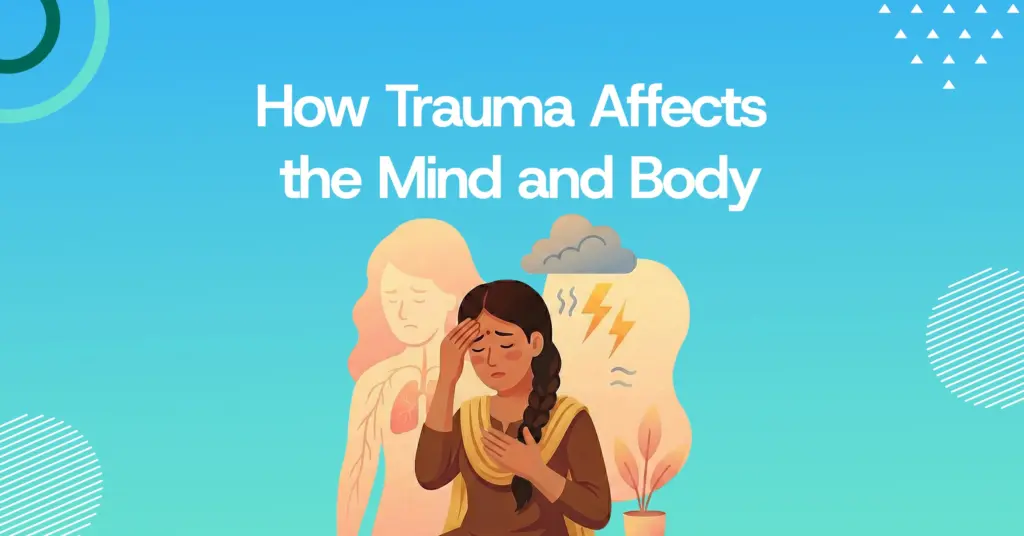
“They traumatised me.” In recent times, you might have heard this term come up frequently in everyday conversations. I definitely have. But have you ever wondered what someone actually means when they use this term? The truth is, more often than not, what someone is trying to express is not trauma itself, but how deeply they were affected by an experience. This overlap can make the word trauma feel confusing, and sometimes misunderstood.
So, what is trauma? According to the American Psychological Association, trauma refers to a deeply disturbing or distressing experience that can result in intense emotional responses and have a long-lasting impact on your behaviour, wellbeing, and functioning.
Now you might wonder, what are trauma responses? Trauma responses are the instinctive reactions that your nervous system puts in place, often influenced by past traumatic events, to protect you from perceived threats. Your body and mind figure out what helped you survive in a particular kind of environment, and adapt your responses to threat accordingly.
While trauma and trauma responses are universal experiences, each and every one of us has a unique way of responding to them.
Need to Talk to Someone?
Book a private online session with a licensed therapist
Why Do Trauma Responses Look Different in Everyone?
Most of us have a habit of comparing ourselves to another person and self-blame for our inability to carry ourselves through situations. Your thoughts probably run in the line of, “They could, but why couldn’t I?”.
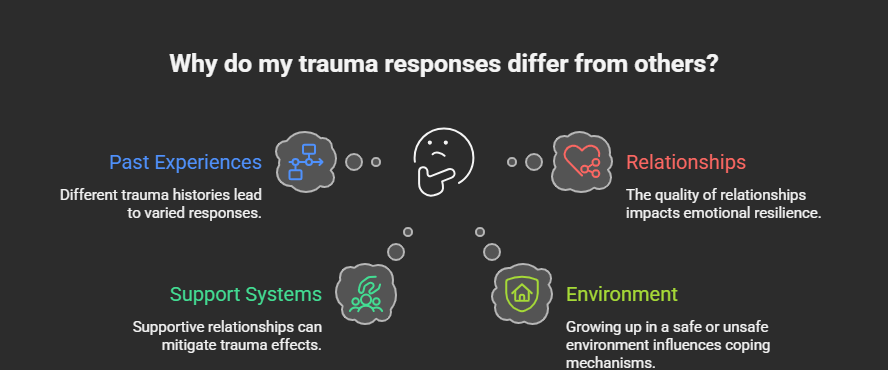
In such situations, it is important to remember that this: your trauma response is influenced by a large number of factors from your past. Someone who has supportive relationships in their life would have a different response compared to someone who had to live through traumatic experiences by themself.
Hence, your response to trauma does not entirely fall upon yourself, but also on the nature of the trauma you experienced, the environment you grew up in, the kind of support you have received, your relationships, and so much more. So, go easy on yourself.
The Core Trauma Responses You May Notice in Yourself
Trauma responses are widely classified into four categories.
Fight - When Your Body Moves Into Survival Mode
The fight response is when you respond to a threat with anger, irritability, or defensiveness. You may experience a surge of adrenaline and an increased heart rate when the body prepares you to face danger head-on.
If this is your default response to threats, it is likely that you have been in traumatic situations where conflict was frequent, and strength, assertiveness, or dominance were necessary to survive.
Flight - When Avoidance Feels Safer Than Staying
The flight response comes with an urge to escape or run away from the situation, people, or conversations because you feel overwhelmed and do not want to be reminded of the situation again.
If this is your default response to threats, it is possible that you were in emotionally unpredictable environments where distance meant safety.
Freeze - When Everything Feels Numb or Stuck
The freeze response is often experienced as a state of paralysis in the face of a threat, where you may feel numb or disconnected. This is very similar to the playing dead survival mechanism common among animals.
If this is how you normally respond to threatening situations, it is possible that you have been in situations where neither fighting nor escaping was possible, and the only way to reduce harm was to keep still.
Fawn - When Pleasing Others Becomes a Survival Strategy
The fawn response is a people-pleasing mechanism aimed at avoiding conflict and thus any risk of re-traumatisation. You may struggle with saying no, setting boundaries, or prioritising your own needs.
If you tend to respond to threats with a fawn response, you may have grown up in situations where your well-being depended on someone else’s happiness, and love felt conditional on “good behaviour.”
How Trauma Responses Can Look Different in the Same Situation
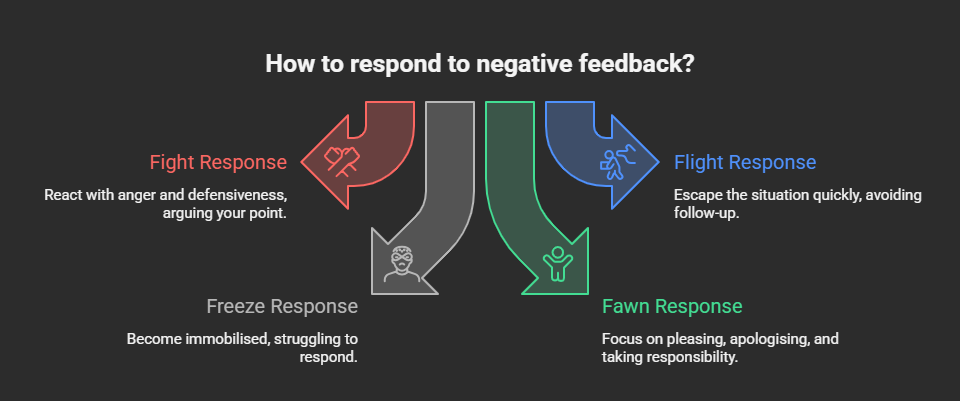
Let’s understand the difference between these trauma responses better with the help of an example. Imagine that your manager called you into their office and gave you unexpected negative feedback on a project you have been passionately working on, questioning your competence and performance.
How would you react?
If you have a fight response, you may feel a surge of anger or defensiveness. You might interrupt, argue your point, or explain yourself intensely. Even if the feedback is valid, it feels threatening, like an attack on your worth.
If you have a flight response, your instinct is to escape the situation as soon as you can. You might nod, end the conversation quickly, and withdraw afterwards. You avoid follow-up discussions and keep a distance from your manager. You may throw yourself into work to prove yourself, or quietly start thinking about quitting.
If you have a freeze response, your system goes into shutdown. You hear the words, but they don’t fully register. Your mind feels foggy, and responding feels difficult. You may struggle to ask questions or defend yourself, not because you agree, but because your body feels immobilised.
If you have a fawn response, your focus quickly shifts to pleasing and restoring approval. You agree quickly, apologise repeatedly, and take responsibility, even for mistakes that may not be fully yours. You reassure them that you’ll do better, work harder, and meet their expectations.
Just because you have one main trauma response, it doesn’t mean that you can’t ever display any of the other responses. Before you react, your nervous system also studies the nature of the threat and analyses whether your default response would be suitable for the given situation. For example, even if you are someone with a fight response, your body would instinctively jump out of the way of a speeding car instead of trying to stand your ground and fight with it.
How Does Trauma Counselling Help?
Trauma counselling , or trauma-focused therapy, does not ask you to relive the past or “get over” what happened. Instead, it helps your nervous system recognise that you are no longer in danger, and understand why certain responses show up automatically.
Trauma counselling can help you:
- Understand your reactions without judging them
- Regulate emotions without suppressing them
- Recognise and manage the physical impact of trauma
- Rebuild trust with others and yourself
- Feel safer in relationships again
A Gentle Reminder
In our society with its expectations and gender norms, some trauma responses are lauded, especially in certain groups of people, while others are shamed. For example, a flight response in a woman is considered normal or expected, while the same in a man is considered a matter of shame, as men are expected to be brave and face danger head-on. Trauma responses don’t exist in isolation. They are shaped not only by personal experiences, but also by the cultural and social expectations placed on us.
Whether you are exploring trauma responses or considering PTSD treatment, the first step is understanding how the body learned to survive. Ever wondered what it would feel like to treat your reactions with curiosity rather than self-blame?
When you feel ready, online counselling with Oppam can offer a safe and supportive space to explore your trauma responses with care.
Struggling?
Talk to an Oppam Therapist
Get the Support You Deserve Online & Confidential