
Take that first step - Use "NEW15" to get 15% off on your first session!

Take that first step  Use "NEW15" to get 15% off on your first session! Take that first step  Use "NEW15" to get 15% off on your first session! Take that first step  Use "NEW15" to get 15% off on your first session!

17 min read

How to Stop Negative Thinking: A Complete Guide to Regaining Your Peace of Mind

How to Stop Negative Thinking: A Complete Guide to Regaining Your Peace of Mind
Imagine this: You’re walking through a beautiful park, but instead of noticing the blooming flowers and the warmth of the sun, you focus on the one wilted leaf on the path. That’s what negative thinking does. Learning how to stop negative thinking can help you shift your attention, brighten your mindset, and break the cycle of “what ifs” and “I’m not enough.”
But here’s the thing: negative thinking is not who you are. It’s just a habit, a pattern of thoughts that can be unlearned. Like clouds passing through the sky, these thoughts don’t have to define you. You can choose to let them go, replacing them with clarity, confidence, and joy.

How to stop negative thinking about yourself

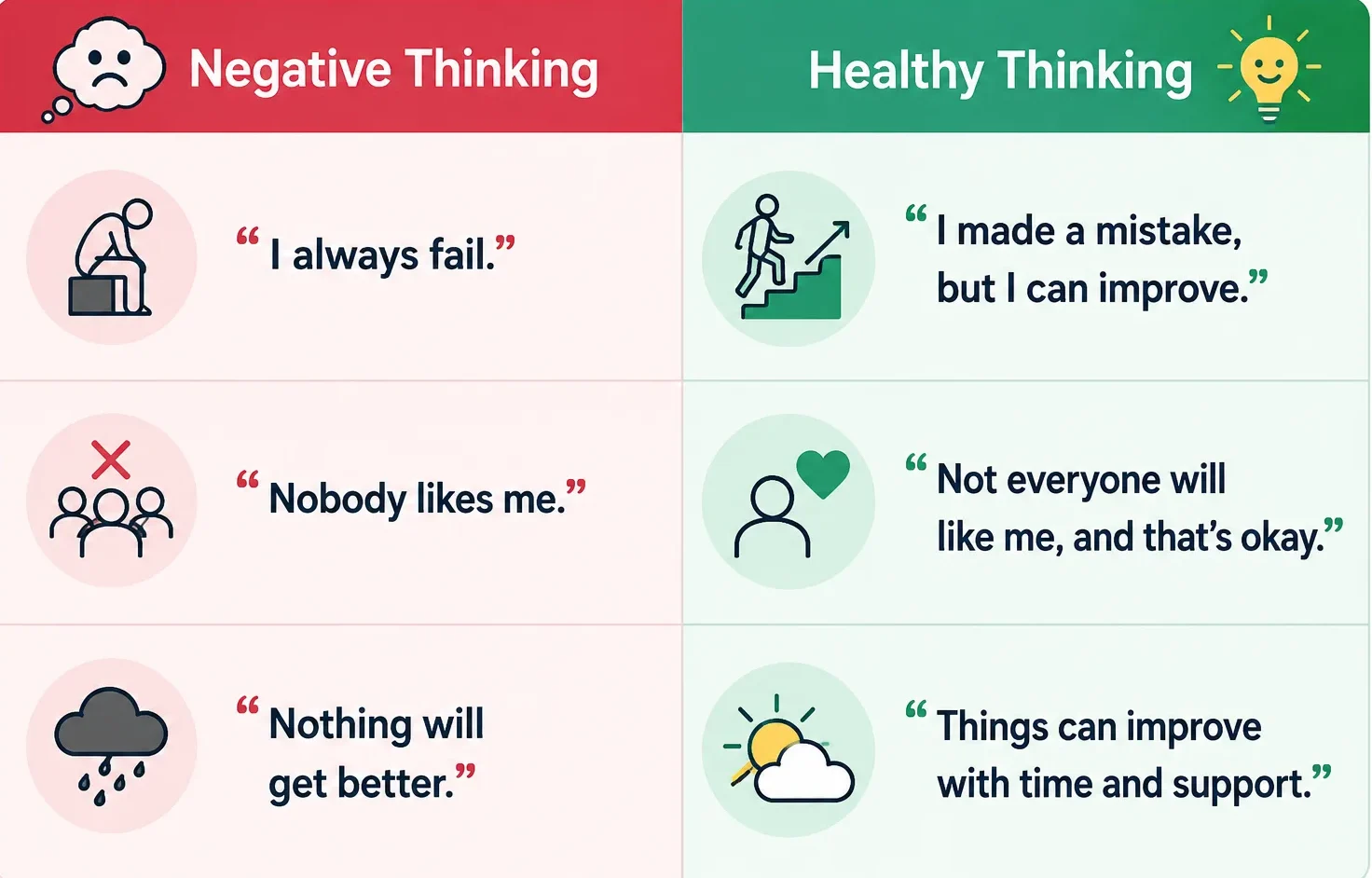
Negative thinking about yourself often develops slowly, shaped by past criticism, comparisons, or difficult experiences. Over time, these thoughts can start sounding like facts, even when they are not true. A useful step is noticing how you speak to yourself. Would you talk to a close friend the same way? Replacing harsh self-talk with more balanced statements doesn’t mean forced positivity — it means being fair. For example, instead of “I always fail,” try “I’m struggling right now, but I’m learning.”
Why Do We Experience Negative Thinking?

Negative thinking is a common part of being human, but when it becomes frequent or overwhelming, it can affect your mental well-being and daily life. Several factors can contribute to persistent negative thoughts, including:

  • Stress and anxiety: Ongoing stress or anxiety can make your mind focus on worst-case scenarios, leading to excessive worry and negative thinking.
  • Low self-esteem: People with low self-confidence may criticize themselves frequently, doubt their abilities, and expect negative outcomes.
  • Past experiences: Difficult childhood experiences, trauma, failures, or painful relationships can influence how you think about yourself and the world.
  • Depression: Persistent negative thoughts are a common symptom of depression and are often accompanied by feelings of hopelessness, sadness, and a lack of motivation.
  • Cognitive distortions: These are unhelpful thinking patterns—such as assuming the worst, over generalising, or seeing situations as all-or-nothing—that can reinforce negative beliefs.

Understanding the root cause of negative thinking is the first step toward managing it. With healthy coping strategies and, when needed, support from a psychologist, it is possible to develop more balanced and constructive thought patterns.

Building self-compassion takes practice. Journaling, limiting comparison on social media, and acknowledging small achievements can slowly change how you see yourself. If negative self-talk feels deeply ingrained or emotionally painful, therapy can provide a safe space to understand its roots and rebuild a healthier relationship with yourself.
What Are Self-Deprecating Thoughts?
Self-deprecating thoughts are negative beliefs or critical statements that you direct toward yourself. They often involve putting yourself down, doubting your abilities, or believing that you are not good enough. While occasional self-criticism is normal, persistent self-deprecating thoughts can affect your mental health and self-esteem.

Common Examples of Self-Deprecating Thoughts

Some common examples include:

  • “I’m not good enough.”
  • “I always fail.”
  • “I can’t do anything right.”
  • “Nobody likes me.”
  • “I’m a burden to others.”
  • “I don’t deserve success or happiness.”
These thoughts may seem believable in the moment, but they are often based on assumptions rather than facts.

What Causes Self-Deprecating Thoughts?

Several factors can contribute to self-deprecating thinking, including:

  • Low self-esteem or lack of self-confidence
  • Childhood criticism or unrealistic expectations
  • Past failures or traumatic experiences
  • Anxiety or depression
  • Constant comparison with others, especially on social media
  • Negative or perfectionistic thinking patterns

How Do Self-Deprecating Thoughts Affect Confidence?

Persistent self-deprecating thoughts can have a significant impact on your emotional well-being. They may:

  • Lower your self-confidence and self-worth
  • Increase feelings of anxiety, stress, or sadness
  • Make it difficult to build healthy relationships
  • Reduce motivation to try new opportunities
  • Lead to fear of failure and self-doubt
Over time, these thoughts can create a cycle where negative beliefs reinforce negative emotions and behaviours.

How Can You Overcome Self-Deprecating Thoughts?

You can gradually reduce self-deprecating thinking by practising healthier mental habits, such as:

  • Challenge negative beliefs by asking whether they are based on facts or assumptions.
  • Replace self-criticism with kind and realistic self-talk.
  • Focus on your strengths, achievements, and personal growth.
  • Avoid comparing yourself to others and celebrate your own progress.
  • Practice self-compassion and treat yourself with the same kindness you would offer a friend.
  • Seek support from a psychologist if self-deprecating thoughts become frequent or begin affecting your daily life.
With consistent practice and professional guidance when needed, it is possible to build healthier thought patterns, improve self-confidence, and develop a more positive relationship with yourself.

Why Negative Thinking Affects Mental Health?
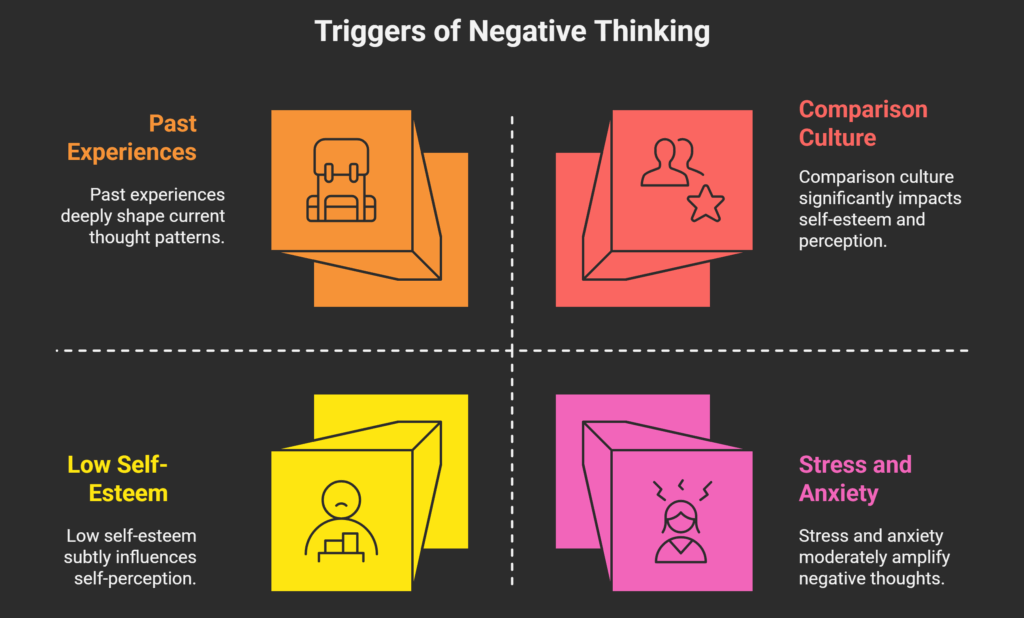
Illustration of a brain surrounded by dark clouds, symbolizing causes of negative thinking.
Negative thinking in Kerala is becoming a common issue among many individuals struggling with stress, anxiety, and daily challenges. These negative thought patterns often feel like a heavy weight, dragging life down without warning. But where does it come from? The root causes of negative thinking in Malayalees may include past trauma, financial stress, relationship struggles, or low self-esteem. By identifying these triggers and seeking Malayalam online counselling in Kerala, you can break the cycle of overthinking and negativity, and improve your overall mental health and emotional well-being.

Past Experiences :

Imagine carrying a backpack filled with unresolved pain, mistakes, or trauma. Every time something reminds you of the past, the weight gets heavier. These past experiences shape how we view the present, often distorting reality through the lens of hurt. But here’s the catch: the past doesn’t have to dictate your future.

Stress and Anxiety :

Ever had a moment where one small stressor spirals into a whirlwind of catastrophic thoughts? It’s like being stuck in a loop where your mind races with worst-case scenarios. The mind is quick to overthink, especially in high-pressure situations, amplifying fear and negativity. But the key is slowing down and grounding yourself.

Low Self-Esteem :

When you doubt your worth, the world around you can feel like a reflection of that doubt. Low self-esteem convinces us that we’re not good enough or that we’ll never succeed. It turns the smallest critique into a confirmation of our fears. But remember: your worth isn’t defined by external circumstances. It starts from within.

Comparison Culture :

With the rise of social media, it’s easier than ever to compare our behind-the-scenes to others’ highlight reels. We often feel like we’re falling short when we measure our lives against the curated success of others. But here’s a reminder: social media is just a snapshot, not the full story. Your journey is unique, and you don’t need to measure it by someone else’s standards.

Biological Factors :

Sometimes, it’s not just the thoughts themselves, it’s the brain’s chemistry at play. Hormonal imbalances or mental health conditions can make it more difficult to break free from negative thinking. But acknowledging this is the first step.
Self-deprecating thoughts

Side Effects of Negative Thinking and Overthinking on Mental Health in Kerala

Negative thinking isn’t just an annoying mental habit; it’s a silent saboteur that can impact every corner of your life. Here’s how:

1. Mental Health Decline :

Negative thinking can trap you in a cycle of anxiety, depression, and burnout. It’s like an emotional fog that clouds your clarity and makes the world seem like a much darker place. The longer you dwell in these thoughts, the harder it becomes to escape.

2. Physical Health Impact :

The effects of negativity aren’t confined to your mind. Stress induced by constant worry or negative thought patterns can show up in the form of chronic headaches, fatigue, and even a weakened immune system. Your body feels the toll, reminding you that mental health is deeply connected to physical health.

3. Strained Relationships :

Constant negativity can push others away, like a magnet repelling its opposite. People might start to avoid you, leaving you feeling isolated and disconnected. Those closest to you, friends, family, partners, might feel emotionally drained by your pessimism, ultimately straining your relationships and creating a wall between you and the support you need.

4. Lost Opportunities :

Fear of failure, rejection, and self-doubt become your greatest barriers. Negative thinking paralyzes you from taking risks, trying new things, or reaching for new opportunities. You remain stuck in a comfort zone that stifles growth and prevents you from experiencing life to its fullest potential.

How to Stop Negative Thinking: 10 Proven Tips

Stopping negative thinking involves a combination of mindfulness, cognitive reframing, and daily habits. Here are some effective methods:

1. Identify the Triggers:

  • Awareness: Keep a journal to note when and why negative thoughts come up.
  • Patterns: Recognize the situations or feelings that often lead to negativity.

2. Challenge Your Negative Self-Talk:

  • Question the Thought: Is it based on facts, or is it just an assumption?
  • Reframe the Perspective: Instead of saying “I’m not good at this,” try thinking “I’m learning and getting better.

3. Practice Gratitude:

  • Daily Gratitude List: Write down three things you’re thankful for each day.
  • Shift Focus: Practicing gratitude helps counteract negativity by highlighting the positive aspects of life.

4.Practice Mindfulness Daily:

  • Meditation: Concentrate on your breath to stay grounded in the present moment.
  • Mindful Observation: Acknowledge the thought, recognize it, and let it go without judgment.

5. Surround Yourself with Positivity:

  • Positive People: Spend time with uplifting friends and mentors.
  • Inspirational Content: Read books or watch videos that promote optimism.

6. Set Realistic Goals:

  • Break It Down: Split larger tasks into smaller, manageable steps.
  • Celebrate Progress: Acknowledge even small achievements to enhance your confidence.

7. Limit Exposure to Negativity:

  • Social Media Detox: Take breaks from platforms that trigger feelings of comparison.
  • Filter Content: Choose news and entertainment that inspire you rather than bring you down.

8. Try Cognitive Behavioral Therapy (CBT)

Cognitive Behavioral Therapy (CBT) is one of the most effective approaches to stop negative thinking. It helps you identify unhelpful thought patterns, challenge them, and replace them with healthier, more balanced perspectives. Through CBT, individuals learn practical strategies to manage overthinking, reduce anxiety, and build a positive mindset. Many people helpful because it provides guidance in their own language and cultural context.

9. Seek Online Counselling in Kerala for Support:

If negative thinking becomes overwhelming, therapy can offer valuable tools and support. A trained psychologist can help you navigate cognitive-behavioural techniques to reshape your thought patterns.

The Power of Positive Affirmations

One of the most effective tools in combating negative thinking is the practice of positive affirmations. These are short, empowering statements that challenge the negative thought patterns we often have about ourselves. Instead of letting your mind spiral with doubt or fear, you replace those thoughts with positive beliefs that promote self-worth and hope.
For example, if you frequently think, “I can’t do this,” replace it with, “I am capable of overcoming challenges.” Over time, positive affirmations can rewire your brain, boosting your self-esteem and fostering a mindset of growth and possibility. This practice works because the more you repeat these affirmations, the more your subconscious mind begins to accept them as truth.
How Can You Stop Negative Thinking and Overthinking?

Breaking the cycle of negative thinking and overthinking takes time and consistent practice. The following strategies can help you develop healthier thought patterns:

  • Recognise recurring thoughts: Pay attention to thoughts that repeatedly make you feel anxious, guilty, or hopeless. Identifying these patterns is the first step toward changing them.
  • Challenge negative assumptions: Ask yourself whether your thoughts are based on facts or assumptions. Replace unhelpful beliefs with more balanced and realistic perspectives.
  • Practice mindfulness: Mindfulness techniques, such as deep breathing or meditation, help you stay focused on the present moment instead of worrying about the past or future.
  • Focus on facts instead of fears: When negative thoughts arise, look for evidence that supports or contradicts them. This can help reduce unnecessary worry and catastrophic thinking.
  • Set aside “worry time”: Allocate 10–15 minutes each day to think about your concerns. When worries appear outside that time, gently remind yourself to address them during your scheduled worry period.
  • Seek professional support if thoughts persist: If negative thinking or overthinking continues to affect your relationships, work, sleep, or daily life, speaking with a psychologist can help. Therapies such as Cognitive Behavioural Therapy (CBT) are effective in identifying and changing negative thought patterns.
With regular practice and the right support, it is possible to reduce negative thinking, manage overthinking, and improve your overall mental well-being.
Every time a negative thought creeps in, it’s like a dark cloud over your day — draining your energy and peace. But what if you could stop that cloud from forming in the first place? In this article, we’ll explore how to stop negative thinking and build a calmer, more positive mindset.

The Role of Physical Exercise in Reducing Negative Thoughts

Exercise serves as a powerful mood enhancer, and its effects on mental well-being are significant. Engaging in physical activity triggers the release of endorphins, the body’s natural “feel-good” hormones, which can quickly elevate your mood and alleviate feelings of anxiety and stress.
Whether you prefer a brisk walk, yoga, or a high-intensity workout, exercise helps redirect your attention from negative thoughts and fosters a sense of control. Additionally, the feeling of achievement that comes from finishing a workout can enhance your self-esteem and diminish negative self-talk.

Breaking Free from the Comparison Trap

In today’s world, social media plays a significant role in fueling negative thinking through constant comparisons. We often compare our lives to others, thinking we aren’t good enough or successful enough. However, comparison only breeds negativity.
Can Negative Thoughts Be Cured?

Negative thoughts are a normal part of life and cannot always be eliminated completely. However, if they become persistent or overwhelming, they can be managed effectively with the right strategies and professional support. Many people learn to reduce the impact of negative thinking and develop healthier thought patterns over time.

Here are some effective ways to manage negative thoughts:

  • Counselling: Talking to a qualified psychologist can help you understand the root causes of your negative thoughts and develop practical coping strategies.
  • Cognitive Behavioural Therapy (CBT): CBT is an evidence-based therapy that helps identify, challenge, and replace unhelpful thought patterns with more balanced and realistic ones.
  • Mindfulness: Mindfulness practices, such as meditation and deep breathing, can help you stay present and reduce the tendency to dwell on negative thoughts.
  • Healthy lifestyle habits: Regular exercise, quality sleep, a balanced diet, and maintaining social connections can positively influence your mood and make it easier to manage negative thinking.
  • Professional mental health support: If negative thoughts persist, interfere with your daily life, or are linked to anxiety or depression, seeking support from a mental health professional can provide personalised guidance and effective treatment.

While negative thoughts may not disappear entirely, they do not have to control your life. With consistent self-care and appropriate support, you can learn to manage them and improve your overall mental well-being.
To combat this, practice self-acceptance. Recognize that everyone’s journey is unique, and success doesn’t look the same for everyone. Limit your social media usage and focus on your own growth rather than what others are doing. Embrace the idea that your value isn’t defined by comparison.
How to stop negative thinking and regain peace of mind – complete self-help guide for managing anxiety, stress, and intrusive thoughts.

Reframing Your Inner Narrative

We all have an inner dialogue, but for some, it can be overwhelmingly negative. Reframing that narrative is one of the most effective ways to break the cycle of negativity. Instead of thinking, “I will fail,” try shifting your inner voice to, “I can learn from my mistakes and improve.”
How Can You Control Negative Thinking?

Controlling negative thinking involves building healthy mental habits that help you respond to challenges with a more balanced perspective. Here are some practical strategies you can try:

  • Keep a thought journal: Write down negative thoughts as they arise. This can help you identify patterns, understand what triggers them, and find more realistic ways of thinking.
  • Replace negative self-talk: Notice when you’re being overly critical of yourself. Instead of saying, “I’m not good enough,” try replacing it with, “I’m learning and improving with every experience.”
  • Practice gratitude: Take a few minutes each day to write down things you’re grateful for. Focusing on positive aspects of your life can gradually shift your attention away from negative thinking.
  • Exercise regularly: Physical activity releases endorphins, which help improve mood and reduce stress. Even a 20–30 minute walk can have a positive impact on your mental well-being.
  • Limit exposure to negative influences: Constant exposure to distressing news, social media, or negative environments can reinforce pessimistic thinking. Set healthy boundaries and spend more time with supportive people and uplifting activities.
  • Use Cognitive Behavioural Therapy (CBT) techniques: CBT helps you identify unhelpful thought patterns, challenge irrational beliefs, and replace them with healthier, more balanced thoughts. Many people find CBT highly effective for managing persistent negative thinking.
If negative thoughts become frequent, overwhelming, or start affecting your relationships, work, or daily life, consider speaking with a psychologist. Professional support can help you develop personalised strategies to manage negative thinking and improve your emotional well-being.
By consciously changing the way we speak to ourselves, we create a more empowering narrative. This shift from self-criticism to self-compassion is essential for overcoming negative thinking and building a healthier mindset.

When to Seek Professional Help for Negative Thinking

Negative thinking can feel like an insurmountable obstacle, but as we’ve explored in this guide, it’s entirely possible to break free from its grasp. By understanding the root causes of negative thoughts, recognizing their harmful side effects, and implementing strategies like positive affirmations, mindfulness, physical exercise, and therapy. For online therapy services, connect with us; you can create lasting change in your mindset.

Occasional negative thoughts are a normal part of life. However, if they become persistent, overwhelming, or begin to interfere with your daily life, it may be time to seek support from a mental health professional. A psychologist can help you understand the underlying causes of negative thinking and teach you effective strategies to manage it.

You should consider seeking professional help if you experience:

  • Persistent negative thoughts: Negative thoughts occur frequently, are difficult to control, or continue for weeks despite your efforts to manage them.
  • Difficulty functioning in daily life: Your thoughts begin to affect your work, studies, relationships, sleep, or ability to enjoy everyday activities.
  • Symptoms of anxiety or depression: You experience ongoing worry, sadness, hopelessness, irritability, loss of interest in activities, changes in sleep or appetite, or difficulty concentrating alongside negative thinking.
  • Thoughts of self-harm or suicide: If your negative thoughts include thoughts of hurting yourself or feeling that life is not worth living, seek immediate help from a trusted family member, friend, or a qualified mental health professional, or contact your local emergency services or crisis support service as soon as possible.
Seeking help is a positive step toward improving your mental well-being. Early support through counselling or evidence-based therapies such as Cognitive Behavioural Therapy (CBT) can help you develop healthier thought patterns and regain emotional balance.
Remember, it’s not about completely eliminating negative thoughts but about learning how to manage them effectively. If negative thoughts are overwhelming, book a confidential online counselling session in Kerala with Oppam’s licensed psychologists today. With time, patience, and consistent effort, you can rewire your brain through CBT therapy in Kerala, focus on the positive aspects of life, and achieve better mental health. This approach can lead to reduced anxiety, improved mental well-being, and a more joyful, fulfilled existence.

Mental health isn’t a luxury It’s your right

Feeling tired, stuck, overwhelmed or just not like yourself lately?
Take a pause. Talk to someone who gets it.

There’s more like that

Scroll to Top