When life feels overwhelming, many people instinctively turn to a close friend to talk things through. Sharing our thoughts with someone we trust can bring comfort and emotional relief. But sometimes people wonder:
A question many people ask is:
If someone knows a relationship is unhealthy, why do they continue to stay in it?
“If I can talk to my friends about my problems, why would I need a therapist?”
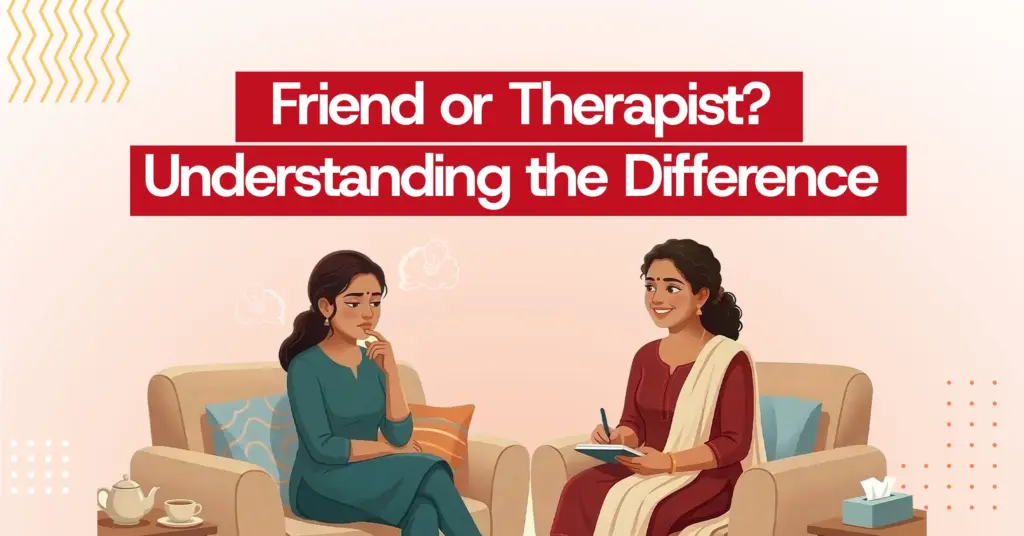
Both friendships and online therapy are valuable forms of emotional support. However, they serve different purposes and offer different kinds of help. Understanding the difference can help you decide when a friendly conversation is enough — and when professional support might be more helpful.
“What is the difference between talking to a therapist and talking to a friend?”
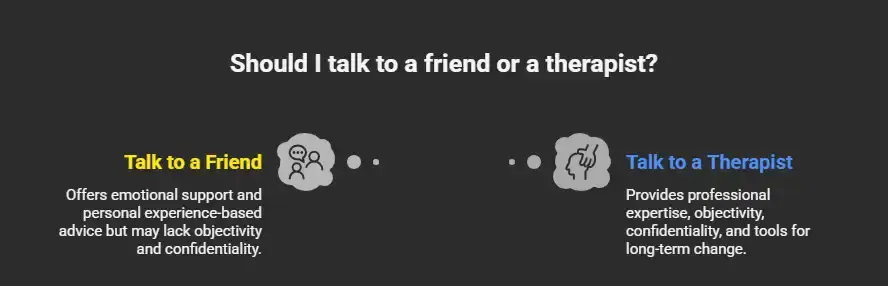
The difference between talking to a therapist and talking to a friend lies in professional training, objectivity, confidentiality, and structured psychological support. Friends provide emotional comfort and companionship, while therapists use evidence-based psychological techniques to help individuals understand emotional patterns, develop coping strategies, and work toward long-term mental wellbeing.
Talking to a friend can provide temporary relief, but therapy focuses on deeper emotional insight, behavioural change, and mental health improvement.
Need to Talk to Someone?
Book a private online session with a licensed therapist
Why Talking to Friends Helps Our Mental Health
Friendships play an important role in emotional wellbeing. Humans are social beings, and meaningful relationships help us feel connected and supported. Talking to a friend can help because:
- Friends provide emotional comfort and empathy
- They often understand our personal history
- Shared experiences create a sense of belonging
- Conversations with friends can reduce stress and loneliness
Research consistently shows that strong social relationships are linked with better mental health and lower levels of depression and anxiety.
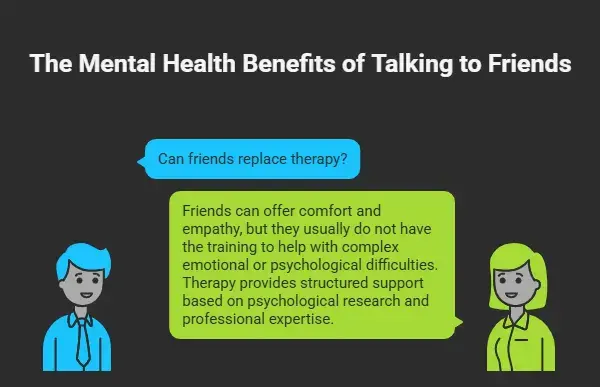
“Can friends replace therapy?”
Friends can offer comfort and empathy, but they usually do not have the training to help with complex emotional or psychological difficulties. Therapy provides structured support based on psychological research and professional expertise.
Sometimes, simply being heard by someone who cares about us can make a difficult day feel a little lighter.
But emotional struggles are not always simple. When problems become complex or persistent, a different kind of support may be needed.
How Talking to a Therapist Is Different
Therapy may look similar to a conversation with a friend — both involve talking, listening, and sharing emotions. However, the purpose, structure, and expertise behind therapy are very different.
Below are some key psychological differences.
1. Professional Training and Psychological Expertise
Therapists spend years studying human behaviour, emotional patterns, and evidence-based psychological techniques.
They are trained to help people understand issues such as:
- anxiety
- depression
- relationship conflicts
- trauma
- stress
- self-esteem difficulties
Unlike friends, therapists are trained to identify patterns in thinking, behaviour, and emotional responses, and guide clients toward healthier coping strategies.
A friend may offer advice based on personal experience. A therapist uses psychological frameworks and therapeutic techniques designed to support long-term emotional change.
2. Objectivity and an Unbiased Perspective
Friends are emotionally connected to us. They care about us deeply — but this connection can sometimes make it difficult for them to remain neutral.
A therapist, on the other hand, is not personally involved in your life. This allows them to offer a more objective perspective and help you see situations from new angles.
Because they are outside your social circle, online therapists can help you:
- challenge unhealthy thought patterns
- reflect on relationship dynamics
- explore difficult emotions without judgment
This outside perspective often helps people gain clarity about situations that previously felt confusing.
3. A Confidential and Safe Space
One of the most important aspects of therapy is confidentiality.
Therapists follow strict ethical guidelines that protect the privacy of what clients share during sessions. This allows people to speak openly about sensitive issues without worrying about social consequences.
While most friends respect privacy, friendships naturally exist within social circles. This can sometimes make people hesitant to share deeply personal experiences.
Online therapy in malayalam creates a space where individuals can talk honestly about:
- fears
- insecurities
- painful experiences
- relationship struggles
without worrying about how it might affect their friendships.
4. The Focus Is Completely on You
Conversations with friends are usually reciprocal. Both people share stories, talk about their experiences, and offer advice to each other.
In Online therapy, the focus is entirely on the client. Sessions are structured specifically to explore the client’s thoughts, emotions, and goals.
This dedicated attention can be surprisingly powerful. Many people find that having a space where they can talk freely — without needing to manage someone else’s feelings — helps them process emotions more deeply.
5. Therapy Provides Tools for Change
Another key difference is that therapy is not just about talking.
Malayali Therapists often help clients develop practical tools such as:
- emotional regulation techniques
- communication skills
- boundary-setting strategies
- coping methods for stress and anxiety
- ways to challenge negative thinking patterns
In other words, therapy focuses not only on understanding problems but also on developing skills that support long-term mental wellbeing.
As some psychologists explain, friends often provide comfort during difficult moments, while therapists help people understand why those difficulties happen and how to navigate them differently in the future.
Friendship and Therapy Are Not Opposites
It’s important to understand that therapy does not replace friendships.
In fact, healthy friendships and professional online counselling can complement each other.
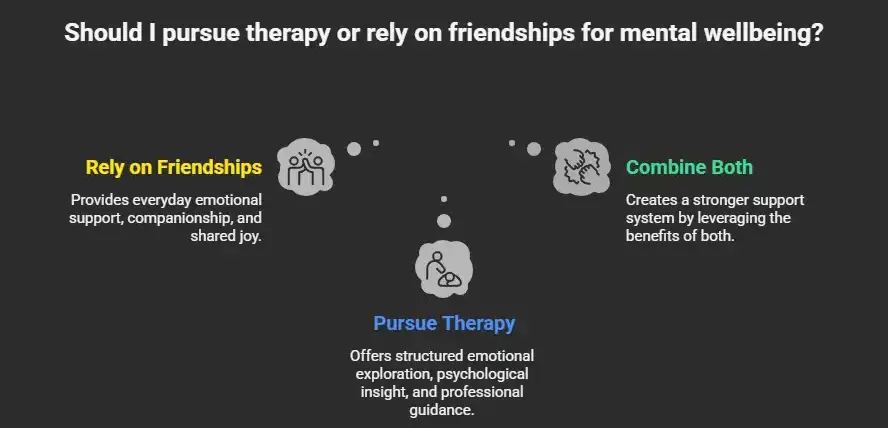
Friends can provide:
- everyday emotional support
- companionship and connection
- shared experiences and joy
Therapy provides:
- structured emotional exploration
- psychological insight
- professional guidance for personal growth
When It Might Help to Talk to a Therapist
While friends are often the first people we reach out to, certain situations may benefit from professional support.
You might consider speaking with a Malayali therapist if:
- emotional distress feels persistent or overwhelming
- problems start affecting work, studies, or relationships
- you feel stuck in repeating patterns
- past experiences or trauma continue to affect your daily life
Seeking Online therapy is not a sign of weakness. For many people, it becomes a meaningful step toward self-understanding and personal growth.
Final Thoughts
Talking to a friend and talking to a therapist both serve valuable roles in our emotional lives.
A friend may offer comfort, empathy, and connection during difficult times. A Online therapist offers professional insight, objectivity, and psychological tools that help people understand themselves and navigate life’s challenges more effectively.
In many ways, the two forms of support work best together.
When we combine meaningful friendships with professional guidance, we create a stronger foundation for emotional wellbeing and personal growth.
Struggling?
Talk to an Oppam Therapist
Get the Support You Deserve Online & Confidential